
Laser Knowledge
Maintenance of Laser Cutting Machine in Summer
As temperatures rise during the summer months, laser cutting machines face greater challenges in maintaining stable performance. High ambient temperatures, increased humidity, dust accumulation, and continuous production schedules can affect the efficiency, accuracy, and lifespan of critical machine components.
Proper summer maintenance not only prevents unexpected downtime but also helps ensure optimal cutting quality, lower operating costs, and longer equipment life. Whether you operate a fiber laser cutting machine, tube laser cutter, or high-power industrial laser system, the following maintenance practices are essential.
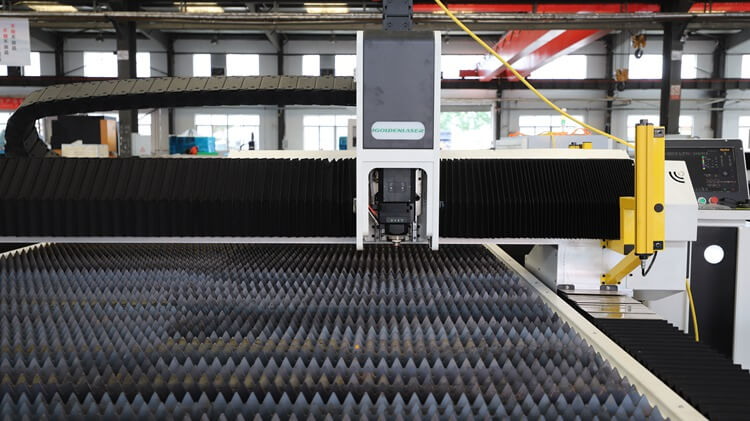
Why Summer Maintenance Is Important for Laser Cutting Machines
Laser cutting machines generate significant heat during operation. During summer, environmental temperatures can push cooling systems and electrical components closer to their operating limits.
Common summer-related issues include:
- Laser source overheating
- Chiller cooling inefficiency
- Condensation inside optical components
- Reduced cutting quality
- Electrical cabinet overheating
- Increased dust contamination
- Higher risk of machine downtime
Regular inspection and preventive maintenance can significantly reduce these risks.
1. Maintain the Industrial Water Chiller Properly
The water chiller is one of the most important components of a fiber laser cutting machine.
Daily Inspection Checklist
- Check water temperature regularly
- Monitor water pressure
- Ensure stable water flow
- Verify chiller alarms and warning indicators
Recommended Water Temperature
For most fiber laser cutting systems:
- Cooling water temperature: 22°C–26°C
- Temperature difference between supply and return water: less than 5°C
Excessively high water temperatures can reduce laser source performance and trigger overheating protection.
Replace Cooling Water Regularly
Use:
- Purified water
- Distilled water
Avoid:
- Tap water
- Hard water
- Contaminated water
Water should generally be replaced every 1–3 months depending on operating conditions.
2. Prevent Condensation on Laser Components
Condensation is a common summer problem, especially in regions with high humidity.
When cold water circulates through the laser system while ambient temperatures are high, moisture may form on:
- Laser source surfaces
- QBH connectors
- Optical components
- Laser head assemblies
How to Prevent Condensation
- Maintain workshop humidity below 70%
- Use dehumidifiers when necessary
- Avoid excessively low chiller temperatures
- Keep electrical cabinets sealed
Condensation can damage sensitive optics and electronic components.
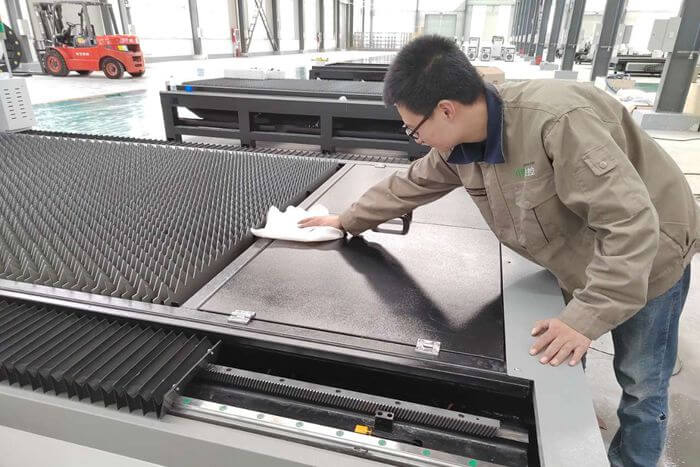
3. Clean Optical Components Frequently
Dust, smoke residue, and airborne particles accumulate faster during summer production.
Inspect and clean:
Protective Lenses
Dirty protective lenses may cause:
- Reduced cutting quality
- Lens overheating
- Increased consumable costs
Nozzles
Check for:
- Spatter buildup
- Deformation
- Blockages
Replace damaged nozzles promptly.
Laser Head
Keep the laser head clean to maintain stable beam quality and cutting precision.
4. Monitor Electrical Cabinet Temperature
The electrical cabinet contains:
- Servo drives
- Controllers
- Power supplies
- Communication modules
High temperatures can shorten component lifespan.
Recommended Actions
- Clean cooling fans regularly
- Check air filters weekly
- Ensure ventilation openings remain unobstructed
- Install industrial air conditioners if necessary
The electrical cabinet temperature should ideally remain below 35°C.
5. Inspect Air Compressor and Air System
Fiber laser cutting machines rely heavily on compressed air and assist gases.
Summer heat can affect:
- Compressor efficiency
- Air dryer performance
- Air quality
Maintenance Tips
- Drain water from air tanks daily
- Replace air filters as recommended
- Check pressure stability
- Inspect air hoses for leaks
Moisture entering the laser cutting system can negatively impact cutting quality and damage components.
6. Check Laser Cutting Gas Supply
Assist gases such as:
- Oxygen
- Nitrogen
- Compressed air
Must remain clean and stable.
Regular Inspection
- Verify gas purity
- Check regulator performance
- Inspect gas pipelines
- Monitor pressure consistency
Poor gas quality can result in:
- Rough cut edges
- Increased dross formation
- Lower cutting efficiency
7. Lubricate Motion Components Regularly
Summer dust and continuous operation increase wear on mechanical systems.
Lubricate:
- Linear guide rails
- Ball screws
- Rack and pinion systems
- Bearings
Benefits include:
- Reduced friction
- Smoother machine movement
- Longer component lifespan
- Improved positioning accuracy
Follow the manufacturer’s lubrication schedule.
8. Maintain Dust Collection Systems
Laser cutting produces metal dust and fumes that accumulate throughout the machine.
Clean Regularly
- Dust collector filters
- Extraction ducts
- Fan systems
- Collection bins
An efficient dust extraction system improves:
- Workshop air quality
- Machine reliability
- Cutting performance
9. Inspect Fiber Laser Source Status
The laser source is the heart of the machine.
Monitor:
- Output stability
- Temperature readings
- Alarm history
- Operating hours
If abnormalities occur, contact professional technical support immediately.
Routine monitoring can prevent major failures and expensive repairs.
10. Maintain a Stable Workshop Environment
The workshop environment directly affects machine performance.
Recommended Conditions
| Parameter | Recommended Value |
|---|---|
| Temperature | 18°C–30°C |
| Humidity | 40%–70% |
| Dust Level | As low as possible |
| Ventilation | Good airflow |
Installing:
- Industrial fans
- Air conditioning
- Dehumidifiers
can significantly improve machine reliability during hot summer months.
Common Summer Problems and Solutions
Problem: Laser Source Overheating
Possible Causes:
- Chiller malfunction
- High ambient temperature
- Poor ventilation
Solution:
- Clean chiller filters
- Improve workshop cooling
- Verify water circulation
Problem: Poor Cutting Quality
Possible Causes:
- Dirty protective lens
- Damaged nozzle
- Moisture in assist gas
Solution:
- Replace consumables
- Inspect gas system
- Clean optics
Problem: Frequent Alarm Messages
Possible Causes:
- Overheating
- Electrical cabinet temperature too high
- Cooling system issues
Solution:
- Check environmental conditions
- Inspect cooling equipment
- Review machine diagnostics
Summer Maintenance Checklist
Daily
✔ Check chiller temperature
✔ Inspect gas pressure
✔ Clean machine surface
✔ Check alarm records
Weekly
✔ Clean filters
✔ Inspect lenses and nozzles
✔ Verify lubrication system
Monthly
✔ Replace cooling water if necessary
✔ Clean electrical cabinet
✔ Inspect compressor and air dryer
✔ Check laser source status
Conclusion
Summer presents unique challenges for fiber laser cutting machines, but with proper maintenance, manufacturers can maintain peak performance throughout the hottest months of the year.
Key priorities include:
- Maintaining the cooling system
- Preventing condensation
- Cleaning optical components
- Monitoring electrical cabinet temperatures
- Ensuring clean gas and air supplies
- Performing regular lubrication and inspections
By implementing a proactive summer maintenance plan, businesses can reduce downtime, extend machine lifespan, improve cutting quality, and maximize production efficiency.
FAQ
Q1: What is the ideal chiller temperature for a fiber laser cutting machine in summer?
Most manufacturers recommend maintaining cooling water between 22°C and 26°C.
Q2: How often should protective lenses be checked?
For high-production environments, inspect them daily and clean or replace them as needed.
Q3: Why does condensation form on laser components?
Condensation occurs when cooling water temperatures are too low compared to ambient temperature and humidity.
Q4: Can high humidity affect laser cutting quality?
Yes. High humidity can introduce moisture into optics, electrical systems, and compressed air, affecting machine performance.
Q5: What is the most important summer maintenance task?
Maintaining the chiller and cooling system is typically the highest priority, as overheating can affect nearly every major machine component.

IGOLDEN BLOG
Thank you for visiting the iGOLDENCNC website. iGOLDENCNC is the professional supplier of CNC machinery application solution, within the business of producing and selling CNC machinery and accessories.