
Laser Knowledge
Stone Monument Laser Cleaning Machine
The restoration of historic buildings, stone carvings, ceramics, stone materials, and historical sculptures is a very strict process. Especially when removing surface contaminants. In the past, when people cleaned cultural relics, stone materials, and cultural heritage surfaces, chemical cleaning or traditional manual grinding methods were often used. However, these methods may damage the surface of relics and stone. May also change the original look of these historical objects.
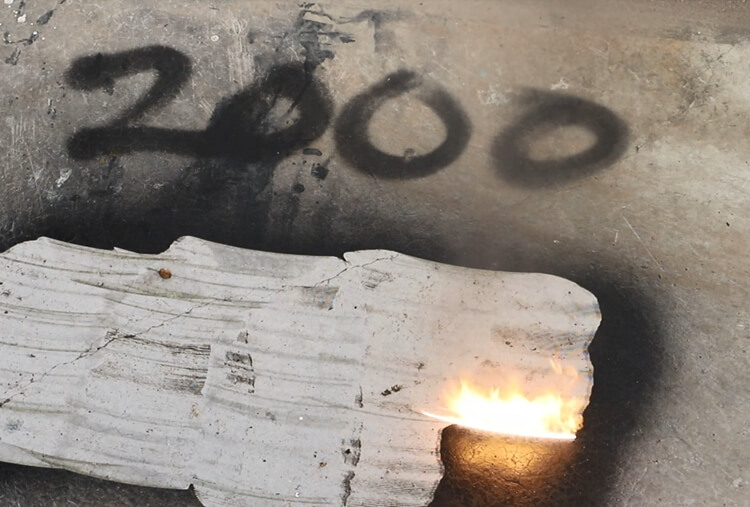
Laser cleaning of stone monuments is a non-contact restoration method that uses high-energy laser pulses to remove dirt, pollution layers, biological growth (moss, lichen), soot, and old coatings from stone surfaces without damaging the original material.
It’s widely used for restoring historic statues, tombstones, marble sculptures, sandstone buildings, and cultural heritage sites.
Stone Laser Cleaning

Contaminants That Pulsed Laser Cleaning Can Remove
Pulsed laser cleaning can be used to remove many common surface contaminants, including:
- black weathering layers;
- oxide layers;
- rust and metal corrosion products;
- soot and smoke deposits;
- dust and soil deposits;
- some oil stains and surface stains;
- pollution crusts on stone surfaces;
- deposits on ceramics and porcelain;
- Some graffiti and old coatings.
Although a pulsed laser cleaning machine can remove many types of contaminants, it is not a solution that can solve all issues. It is not suitable for every material or every contaminant. The actual cleaning result depends on the base material, contamination thickness, colour, absorption rate, surface condition, and laser parameter settings.
Before cleaning cultural relics, old stone carvings, or stone materials, a sample test should be done according to the material condition.
Pulsed Laser Cleaning Machine Work Principle
Pulsed laser cleaning is a cleaning technology that uses short, high-energy laser pulses to remove surface contaminants. Unlike continuous laser cleaning, a pulsed laser cleaning machine does not output energy all the time. It releases laser energy in very short pulses. The advantage of this working method is that laser energy can focus on the contamination layer. It can reduce heat build-up inside the base material.
So, in the restoration process, laser cleaning can be used as a gentler and more controllable solution. By adjusting the power, frequency, pulse width, scanning speed, and focal distance of the laser cleaning machine, the operator can achieve more precise cleaning control. It is suitable for cultural relics, artworks, historic buildings, and other high-value restoration work.
Key advantages
- Non-contact & non-abrasive
- Highly precise (removes only contamination layer)
- No chemicals or secondary waste
- Safe for detailed carvings and inscriptions
- Adjustable power for different stone types
- Environmentally friendly restoration method
Laser Cleaning vs Traditional Cleaning Methods
| Cleaning Method | Advantages | Limitations |
| Pulsed laser cleaning | Non-contact, high precision, no chemical residue, layer-by-layer cleaning, controllable heat effect | Needs professional equipment and trained operators |
| Chemical cleaning | Effective for some stains, a mature cleaning method | May cause chemical residue, corrosion, or material reaction |
| Sandblasting / mechanical cleaning | Fast cleaning speed, suitable for some hard industrial surfaces | Too rough for cultural relic surfaces and may cause wear |
| Manual cleaning | Flexible and suitable for small areas | Low efficiency, result depends on operator experience |
| Water cleaning / high-pressure cleaning | Lower cost, suitable for some normal surfaces | May cause water to enter the material, salt migration, or structural damage |
For cultural heritage restoration, the main value of pulsed laser cleaning is not only cleaning efficiency. The key value is control.
The operator can adjust laser power, pulse width, scanning speed, and focal distance according to the relic material and contamination layer. This helps achieve a gentler and more precise cleaning result.
Typical applications
- Marble statues in museums and churches
- Granite tombstones and memorials
- Sandstone historical buildings
- Bronze + stone composite monuments
- Public heritage sculptures exposed to pollution
Pulse laser cleaning can be used for many types of relics and historical materials. However, different materials need different parameter settings.
| Material Type | Common Cleaning Content | Notes |
| Stone | Black weathering layer, soot, dust, graffiti, pollution crust | Parameters should be adjusted according to stone porosity and colour |
| Bronze relics | Oxide layer, corrosion products, surface deposits | Avoid removing too much historical patina |
| Iron relics | Rust layer, oxide layer | Control the heat effect and cleaning depth |
| Ceramics | Surface stains, soot, deposits | Protect the glaze and tiny cracks |
| Porcelain | Dust, light contaminants | Low-energy and small-area testing are recommended |
| Wooden relics | Some surface deposits | Use with great care to avoid heat damage |
| Murals / painted surfaces | Soot, surface contaminants | Must be tested and operated by professionals |
For high-value cultural relics, the goal is not to make the object look completely new. The goal is to remove harmful contamination layers while protecting the original material and historical traces.
How to Choose
Why pulsed is the standard for monuments — pulsed laser cleaning releases energy in shorter time bursts, making it more suitable for heat-sensitive materials. With correct parameters, it can reduce heat transfer into the base material. Many sculptures, stone carvings, inscriptions, and reliefs have small textures and complex shapes — laser cleaning can work on local areas, which helps protect fine details. Portable pulsed laser cleaning machines can be used at outdoor sites, historic buildings, monuments, archaeological sites, and museum restoration areas.
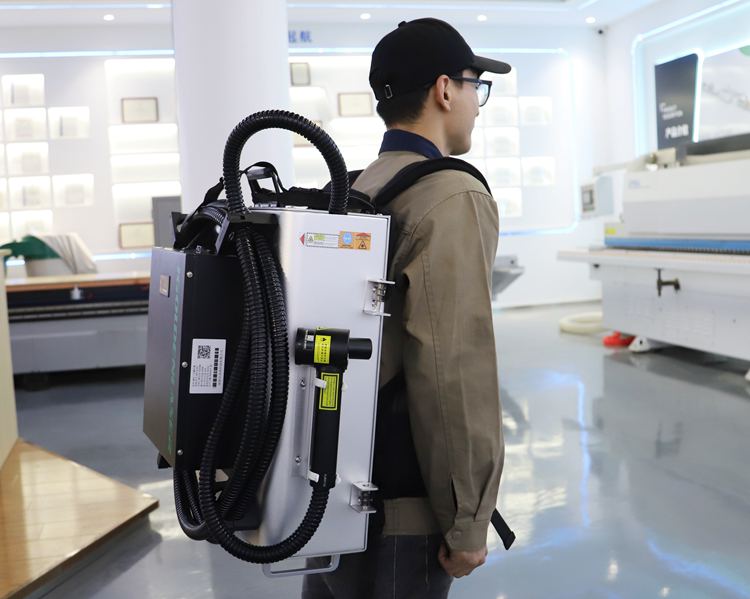
How peak power works in pulsed machines — pulsed lasers emit short, high-intensity bursts in nanoseconds. Peak power reaches 10–50 kW even at average powers of 200–1000W. Each pulse creates a micro-explosion that vaporizes contaminants instantly, with minimal heat input.
Recommended power for heritage work — for most cultural heritage restoration work, 200W–500W pulsed laser cleaning machines are the common choice. Lower power is suitable for delicate relics, small artworks, ceramics, bronze relics, and other sensitive surfaces.
Power tiers for stone specifically — for stone, pulse laser power options range from 100W for precision work on fragile or culturally significant stone objects such as statues or inscriptions, up to 500W which balances cleaning efficiency with surface safety and is often used in the restoration of old buildings and monuments. Continuous machines range from 1000W to 6000W, delivering steady power and higher cleaning speeds.
Portable field use — for outdoor cleaning and cultural relic restoration, air cooling is more convenient as it does not need an external water cooling system.

IGOLDEN BLOG
Thank you for visiting the iGOLDENCNC website. iGOLDENCNC is the professional supplier of CNC machinery application solution, within the business of producing and selling CNC machinery and accessories.