
Buyer Guide
CO2 Laser Engraving Machine (Complete Buyer’s Guide)
Choosing the right CO₂ laser cutting and engraving machine is a key decision for any business that processes non-metal materials such as wood, acrylic, MDF, leather, and plastics. A well-matched laser system can improve production efficiency, reduce waste, and elevate finished product quality.
This guide walks you through the most important factors to consider when selecting a CO₂ laser machine, helping you make an informed purchase that fits your manufacturing needs.
What Is a CO₂ Laser Cutting & Engraving Machine?
A CO₂ laser cutting and engraving machine uses a carbon dioxide gas-filled laser tube to generate a focused infrared beam at a wavelength of 10.6 micrometers. This beam is directed through a series of mirrors and focused through a lens onto the material surface, where it melts, burns, or vaporizes material along a computer-controlled path with extraordinary precision.
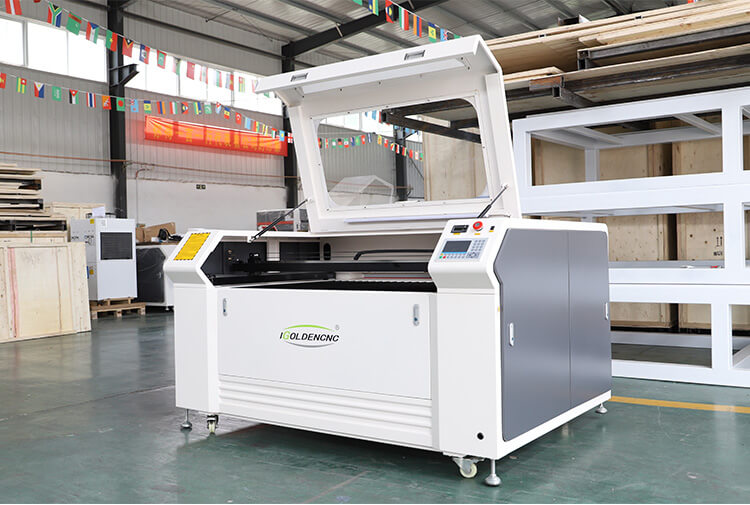
CO₂ lasers are the most widely used laser type in the world for processing non-metallic materials. They have been the industry standard for wood cutting, acrylic fabrication, leather engraving, fabric cutting, and signage production for over three decades — and today’s CNC-controlled versions combine this proven technology with modern motion control, software integration, and automation to deliver industrial throughput at accessible price points.
Unlike a CNC router, which physically contacts the material with a spinning bit, the CO₂ laser is entirely non-contact. There is no tool pressure, no tool wear on the workpiece, and no mechanical stress on the material. This makes it the preferred process for delicate, thin, or precision-demanding materials where a physical cutting force would cause deformation or damage.
Consider the Working Area Size
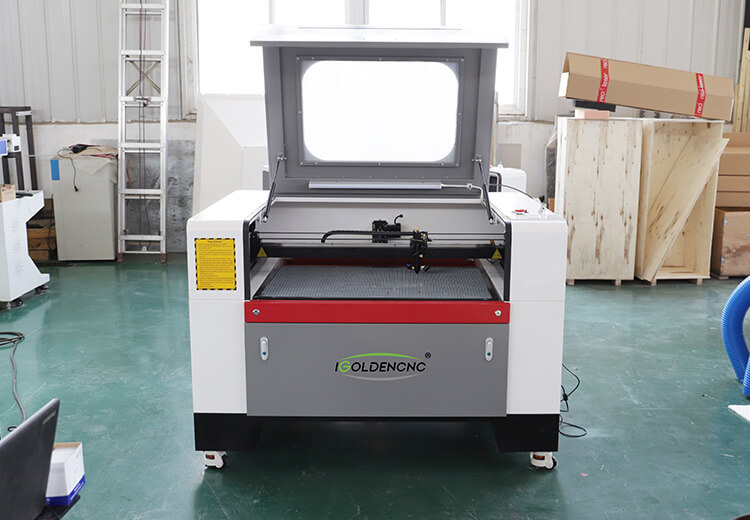
The working area determines the maximum size of materials you can process in one pass. Common sizes include:
- 600 × 400 mm – Small crafts and prototype work
- 1300 × 900 mm – Medium format applications
- 1600 × 1000 mm and above – Industrial production
Select a working area that matches your typical job sizes. Oversizing increases cost without added benefit; undersizing limits productivity.
Evaluate Laser Power and Tube Quality
Laser power affects:
- Cutting speed
- Material thickness capacity
- Edge smoothness
Typical CO₂ laser tube power ratings range from 60W to 150W and above. Higher power:
- Cuts thicker materials
- Speeds up production
However, higher power should be paired with quality components — not just wattage. CO₂ tubes and optics from reputable suppliers extend service life and reduce maintenance issues. At iGOLDENLASER, CO₂ laser tubes are selected for longevity and stable output.
Technical Specifications
| Specification | Details |
|---|---|
| Laser Type | Sealed CO2 laser tube, 10.6μm |
| Laser Power | 80W / 100W / 120W / 150W |
| Work Area | 600×900mm / 1300×900mm / 1300×2500mm |
| Cooling Method | CW3000 water cooling |
| Engraving Speed | 0–60,000 mm/min |
| Cutting Speed | 0–40,000 mm/min |
| Position Accuracy | ≤ 0.01mm |
| Software Support | CorelDRAW, AutoCAD, Photoshop |
| Graphic Formats | DST, PLT, BMP, DXF, DWG, AI, LAS |
| Control System | DSP controller (USB/Wi-Fi options) |
| Auxiliary | Exhaust fan, Air pump |
| Power Supply | AC110V/220V ±10%, 50/60Hz |
*Actual specifications may vary by model and configuration.
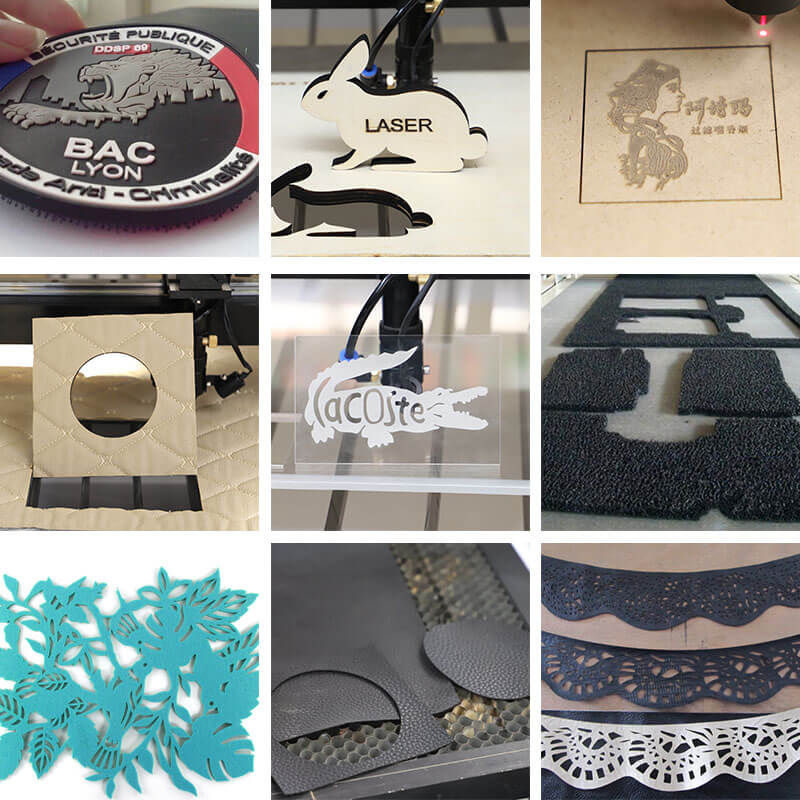
Key Applications of CO₂ Laser Machines
How Does a CO₂ Laser Machine Work?
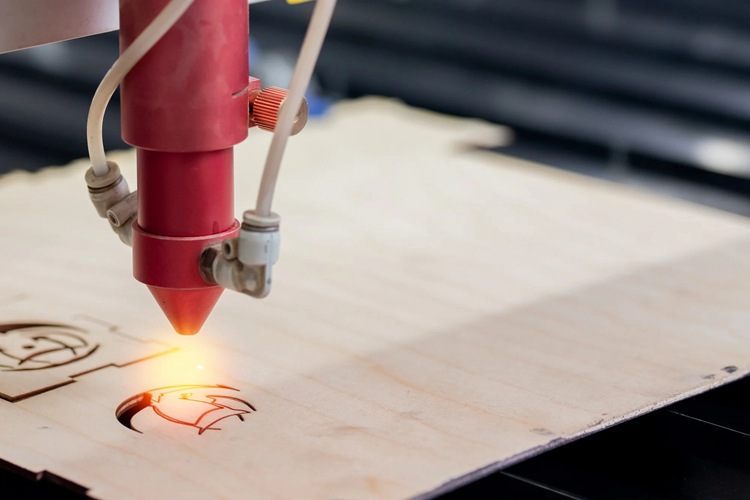
- 01 Beam Generation
- 02 Beam Delivery
- 03 Material Processing
The CNC controller reads the design file — typically exported from software like CorelDraw, Adobe Illustrator, AutoCAD, or a dedicated laser CAM package — and translates it into coordinated X-Y motion commands. Cutting speed, laser power, and pulse frequency are all programmable parameters that the operator sets per material and per operation type.
An air-assist nozzle blows compressed air or nitrogen coaxially with the laser beam at the cutting point. This serves two purposes: it ejects molten or vaporized material from the kerf before it re-solidifies, producing a cleaner cut edge; and it prevents flame and smoke from rising into the focusing lens, extending lens life significantly.
What are the Advantages of a CO2 Laser Machine?
1.Wide range of processing: CO2 laser engraver can engrave and cut almost any non-metal material and has a very wide application in manufacturing industry, art industry, and medical industry.
2.Safe and reliable: adopting non-contact processing, CO2 CNC laser cutter for sale will not harm the surface of the machined part or deform the material.
3.Eco-friendly: the diameter of beam and spot is small generally less than 0.5mm, it has the features of material saving, safety and environmental protection.
4.High-speed and fast: it can immediately perform high-speed engraving and cutting according to the drawings output by the computer.
5.Low cost: it has low maintenance costs and only needs inexpensive replacement parts. Especially for small batch processing services, laser processing is cheaper.
CO2 Laser Cutting and Engraving Machine
1. What is a CO2 laser cutting and engraving machine used for?
A CO2 laser cutting and engraving machine is used to cut and engrave non-metal materials such as wood, acrylic, leather, fabric, rubber, plastic, and paper. It is widely applied in signage, woodworking, crafts, and packaging industries.
2. What materials can this CO2 laser machine process?
This CO2 laser cutting and engraving machine works efficiently on MDF, plywood, acrylic sheets, leather, textiles, foam, rubber, cardboard, and most organic materials. It is not designed for direct metal cutting.
3. How accurate is the CO2 laser engraving machine?
The CO2 laser cutting and engraving machine provides high positioning accuracy up to ±0.01 mm, ensuring clean cutting edges and fine engraving details for both small and large production runs.
4. What laser power options are available?
Our CO2 laser cutting and engraving machine is available with 80W, 100W, 120W, and 150W laser power options, allowing users to choose the right configuration based on material thickness and cutting speed requirements.
5. What working area sizes can I choose from?
Standard working areas include 600×900 mm, 1300×900 mm, and 1300×2500 mm. Larger sizes can be customized for industrial CO2 laser cutting and engraving machine applications.
6. Does the CO2 laser machine support common design software?
Yes. The CO2 laser cutting and engraving machine is compatible with CorelDRAW, AutoCAD, and Photoshop, and supports file formats such as DXF, PLT, AI, BMP, and DWG.
7. Is water cooling required for a CO2 laser cutting machine?
Yes. A stable water-cooling system is required to maintain laser performance and extend the service life of the CO2 laser tube in the CO2 laser cutting and engraving machine.
8. Is this CO2 laser cutting and engraving machine suitable for industrial use?
Yes. With a rigid machine frame, reliable motion system, and continuous operation capability, this industrial CO2 laser cutting and engraving machine is suitable for workshops, factories, and professional production environments.

IGOLDEN BLOG
Thank you for visiting the iGOLDENCNC website. iGOLDENCNC is the professional supplier of CNC machinery application solution, within the business of producing and selling CNC machinery and accessories.