
Laser Knowledge
Waterjet vs Laser Cutting: Differences, Costs & Applications
When comparing waterjet vs laser cutting, manufacturers need to consider more than cutting speed or machine price. Both technologies can produce precise parts, but they use different cutting methods and are suited to different materials, thicknesses, and production requirements.
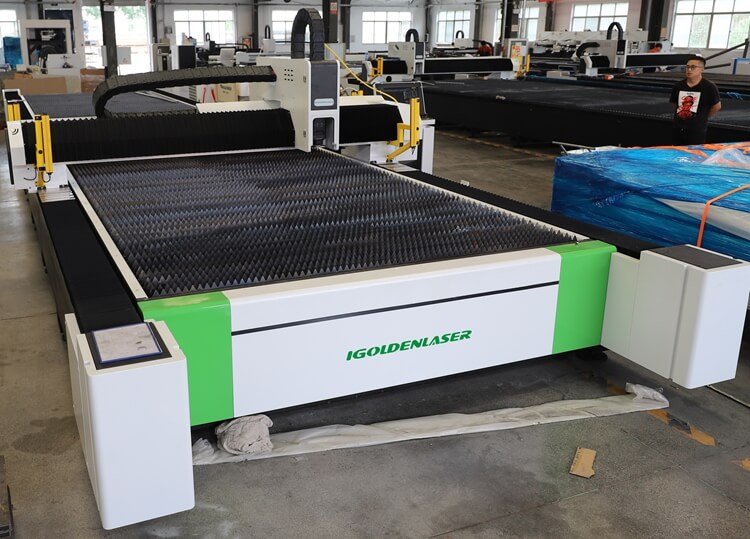
Waterjet cutting uses a high-pressure stream of water, often mixed with abrasive particles, to cut materials mechanically. Laser cutting uses a concentrated beam of light to melt, burn, or vaporize material along a programmed path.
A fiber laser cutting machine is often an excellent choice for fast, automated metal sheet processing. A waterjet cutting machine is particularly useful when processing thick materials, stone, glass, ceramics, composites, or other heat-sensitive materials that are difficult to cut with a conventional laser.
This guide compares waterjet and laser cutting to help manufacturers choose the right technology for their applications.
What Is Waterjet Cutting?
A waterjet cutting machine directs a high-pressure stream of water through a small nozzle. For hard materials, abrasive particles such as garnet are added to the water to improve cutting capability.
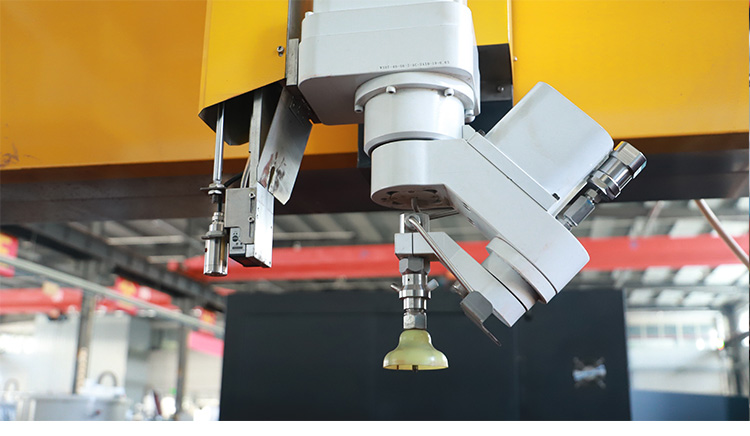
The CNC control system moves the cutting head along a programmed path to produce the required shape.
How Does Waterjet Cutting Work?
Waterjet cutting uses a water stream to cut through the materials. The water is propelled through a nozzle at high speeds. The jewel has a hole that is about 0.010″ to 0.015” in diameter and it is used to drive water through. With a maximum pressure of 392 MPa (about 4,000 atmospheres), the water is ejected from the nozzle. An abrasive substance such as garnet is fed into the center of the stream. Depending on the type and thickness of the material being cut, a waterjet can cut material at a relatively high speed which is stated to be around six inches per minute.
Waterjet cutting is widely used for:
- Granite, marble, quartz, and other stone materials
- Glass and ceramics
- Thick metal plates
- Aluminum and stainless steel
- Composite materials
- Rubber, foam, and selected plastics
One of the main advantages of waterjet cutting is that it does not rely on a heat-based cutting process. This helps avoid the heat-affected zone and thermal distortion associated with thermal cutting methods.
Waterjet performance still depends on material type, thickness, abrasive selection, pressure, nozzle condition, and cutting speed.
What Is Laser Cutting?
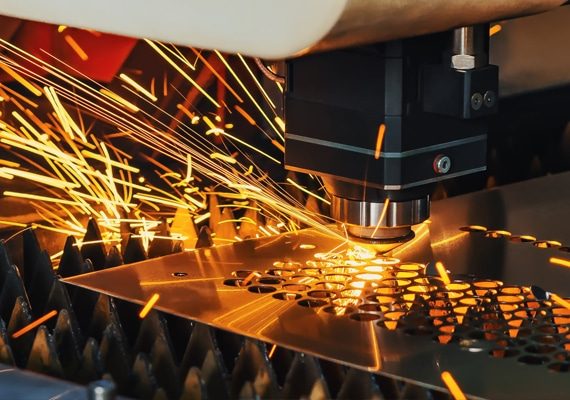
Laser cutting uses a focused laser beam to remove material. Depending on the material and cutting process, the beam melts, burns, or vaporizes the material, while an assist gas helps remove molten material from the cut.
How Does Laser Cutting Work?
The laser cutting process uses a beam of light to cut through materials. First, the laser focuses on the material to be cut and heats it. Once heated, the laser breaks through the material and leaves a sharp edge with a smooth finish.
Next, the laser uses gas to blow away any remaining material. The resulting beam is produced by an electrical discharge in a gas such as carbon dioxide, nitrogen, or argon.
Lasers are so powerful that even materials like 0.5-inch (13 mm) thick stainless steel can be cut with them in 5 to 15 seconds.
Fiber laser cutting machines are widely used for metal fabrication because they combine high cutting speeds, CNC automation, and precise contour processing.
Typical applications include:
- Carbon steel sheet cutting
- Stainless steel fabrication
- Aluminum sheet processing
- Brass and copper cutting with suitable equipment
- Electrical cabinets
- Automotive components
- Machinery parts
- Metal furniture
- Industrial enclosures
- Metal signage
CO₂ laser systems can be used for suitable nonmetallic materials, including some wood, acrylic, textiles, and plastics. Material compatibility depends on the laser wavelength, power, machine configuration, and material composition.
Important: Not every laser cutting machine can cut every material. For example, standard fiber laser systems are generally designed for metals, while glass, transparent plastics, stone, and many ceramics require other technologies or specialized laser systems.
Waterjet vs Laser Cutting: Operating Costs
The initial purchase price is only one part of the total cost of ownership.
Waterjet Cutting Costs
Waterjet operating costs can include:
- Electricity for the high-pressure pump
- Abrasive material
- Cutting water
- Orifice and focusing tube replacement
- Seals and high-pressure components
- Water treatment and disposal
- Sludge and abrasive waste handling
- Routine maintenance
Abrasive consumption, pump efficiency, nozzle life, and cutting speed can significantly affect the cost per part.
Laser Cutting Costs
Laser cutting operating costs can include:
- Electricity
- Assist gases such as nitrogen or oxygen
- Nozzles and protective windows
- Filters and extraction systems
- Cooling equipment
- Maintenance and service
- Replacement components, depending on the system
Laser cutting can provide a low cost per part for suitable high-volume sheet metal applications, especially when cutting speed and automation are fully utilized.
Waterjet vs Laser Cutting Speed
When it comes to cutting metal, both waterjet and laser technology have their pros and cons. But which one is faster?
It depends on the application. But for thicker materials, the water jet can break through the material more quickly, removing more material in less time than a laser cutter.
However, the laser is typically faster for thinner materials. In thinner materials, the laser beam can easily penetrate the material and vaporize it, cutting through more quickly.
Overall, waterjet cutting machines have a cutting speed of nearly twenty inches per minute and a laser machine can cut up to seventy inches per minute.
Advantages and Disadvantages
Waterjet Cutting Advantages
- Cuts a broad range of materials with the appropriate setup.
- Avoids a thermal heat-affected zone.
- Suitable for many thick materials.
- Supports intricate contours and internal cutouts.
- Useful for stone, glass, ceramics, and composites.
Limitations:
- Abrasive and maintenance costs can be substantial.
- Cutting can be slower than laser cutting on thin metal sheets.
- Requires high-pressure equipment and water management.
- Wet workpieces and abrasive waste may require additional handling.
Laser Cutting Advantages
- High cutting speeds for suitable metal sheets.
- Narrow kerf and detailed contour cutting.
- Well suited to CNC automation and production lines.
- No abrasive consumption.
- Effective for repetitive, high-volume metal fabrication.
Limitations:
- Thermal effects may affect some materials or applications.
- Performance varies substantially with material and thickness.
- Assist gas and protective consumables contribute to operating costs.
- Standard fiber laser systems are not suitable for every nonmetallic material.
- Requires appropriate laser safety measures and fume extraction.
Material Compatibility: Which Machine Cuts What?
Material compatibility is often the first consideration when choosing between waterjet and laser cutting.
Metals
Both technologies can cut metals, but their strengths differ.
Fiber laser cutting is commonly preferred for high-volume production of carbon steel, stainless steel, aluminum, brass, and copper sheets when the machine is correctly configured.
Waterjet cutting is useful for thick metal plates, heat-sensitive assemblies, reflective materials, and applications where thermal effects must be minimized.
The practical thickness range depends on the machine’s capabilities and the required edge quality. Very thick material may be cut more slowly with either technology.
Stone and Quartz
For stone fabricators processing granite, marble, quartz, quartzite, and engineered stone, waterjet cutting can produce intricate contours, internal corners, decorative patterns, and custom shapes.
A CNC bridge saw is often more efficient for conventional slab sizing and straight or miter cuts, while a waterjet can complement the saw for more complex geometries.
Standard metal-cutting fiber lasers are not a direct substitute for stone-cutting waterjets or bridge saws.
Glass and Ceramics
Waterjet cutting is suitable for many glass and ceramic cutting applications, provided the material and thickness are compatible with the equipment and process settings.
Laser cutting can process certain glass and ceramic materials using specialized laser systems or methods, but the result depends on the material’s optical and thermal properties.
Wood, Acrylic, and Plastics
For wood, acrylic, and many nonmetallic materials, a suitable CO₂ laser or CNC router may be more practical than a waterjet.
The right technology depends on the material composition, thickness, desired edge, and whether engraving is also required. Some plastics should not be laser-cut because they can release hazardous fumes or damage equipment.

IGOLDEN BLOG
Thank you for visiting the iGOLDENCNC website. iGOLDENCNC is the professional supplier of CNC machinery application solution, within the business of producing and selling CNC machinery and accessories.