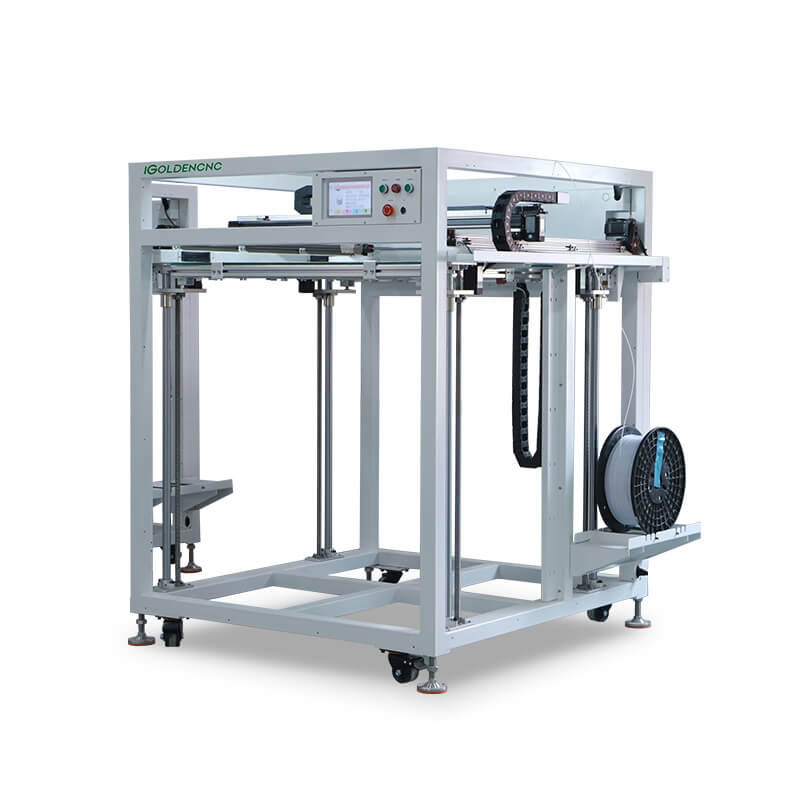
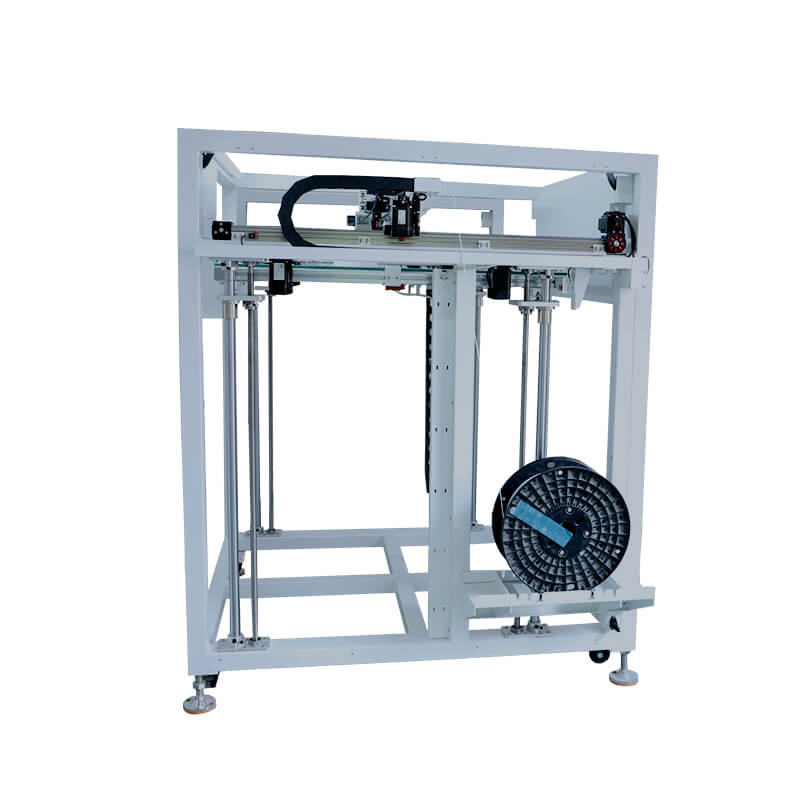
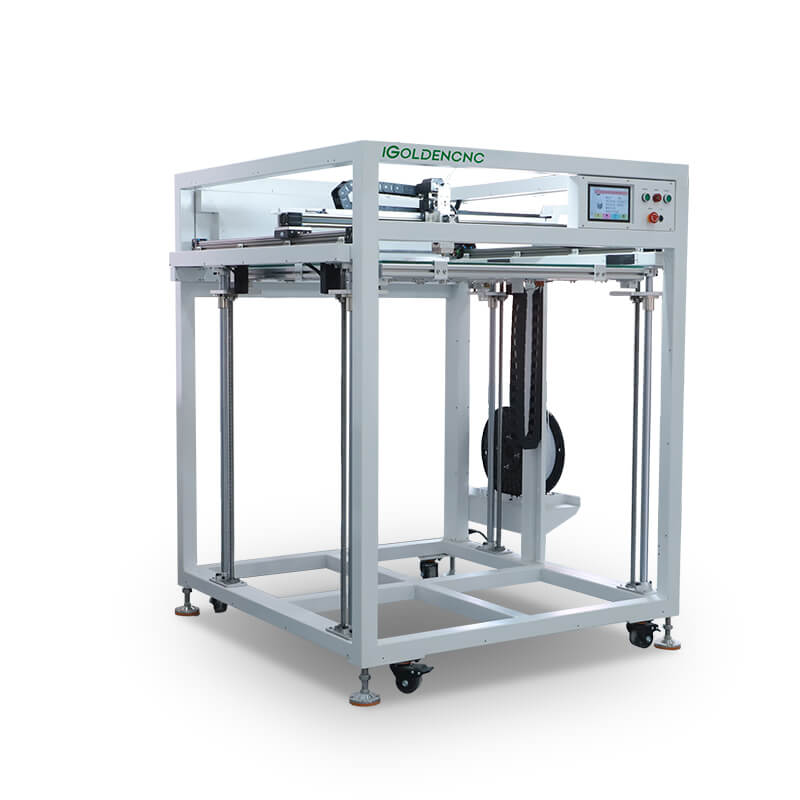
iGM-3DF-1000
Large Format 3D Printer
An industrial large size 3D printer is a professional additive manufacturing system designed for producing large-scale prototypes, functional parts, molds, tooling, and end-use products. Compared with desktop 3D printers, industrial large-format 3D printers offer a much larger build volume, higher printing speed, stronger mechanical structure, and the ability to process engineering-grade materials.
An industrial size 3D printer is a high-performance additive manufacturing machine that creates three-dimensional objects layer by layer based on digital 3D models.
Unlike conventional manufacturing methods that remove material through cutting or machining, 3D printing builds parts directly from materials, allowing manufacturers to create:
- Large prototypes
- Complex components
- Functional parts
- Custom products
- Industrial molds
- Lightweight structures
Large-format 3D printers are mainly used in professional manufacturing environments where high precision, reliability, and production efficiency are required.
Advantages of 3D Printers
Large Build Volume
The biggest advantage is the ability to manufacture large parts in one piece.
Benefits:
- Reduced assembly requirements
- Stronger finished products
- Faster production
Faster Product Development
Traditional manufacturing may require weeks for tooling and molds.
Large 3D printing enables:
- Same-day prototypes
- Rapid design testing
- Quick modifications
Reduced Manufacturing Costs
By eliminating expensive molds and reducing machining requirements, businesses can lower development costs.
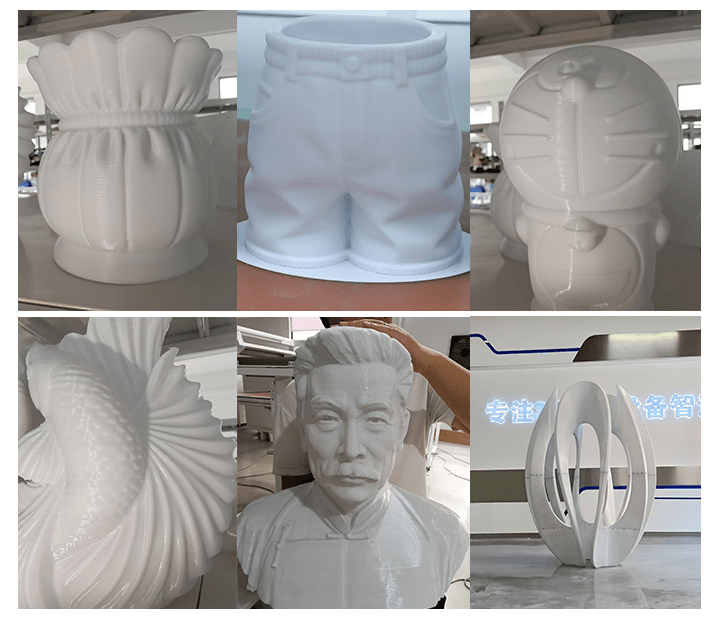
Complex Design Capability
3D printing allows manufacturers to create:
- Internal structures
- Lightweight designs
- Custom geometries
- Organic shapes
These designs are difficult or impossible with traditional manufacturing.
3D Printer Technical Parameter

FDM 3D Printing
Fused Deposition Modeling (FDM) — also called Fused Filament Fabrication (FFF) — is the world’s most widely used 3D printing technology. A thermoplastic filament is fed through a heated nozzle, melted, and deposited layer by layer onto a build plate to build up a three-dimensional object from the bottom up.
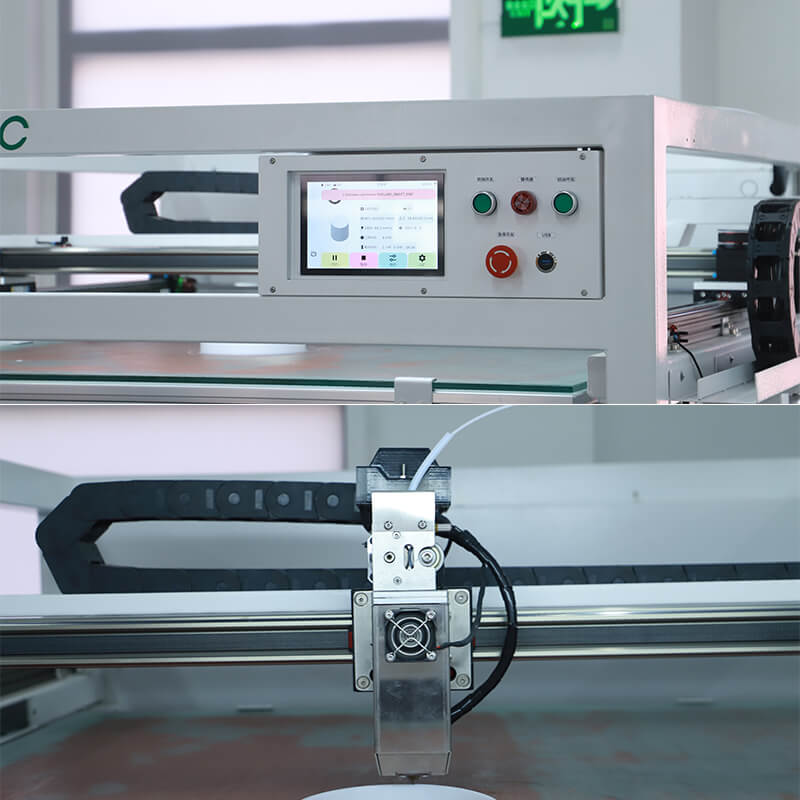
Heavy-Duty Integrally Welded Frame for Vibration-Free Stable Printing
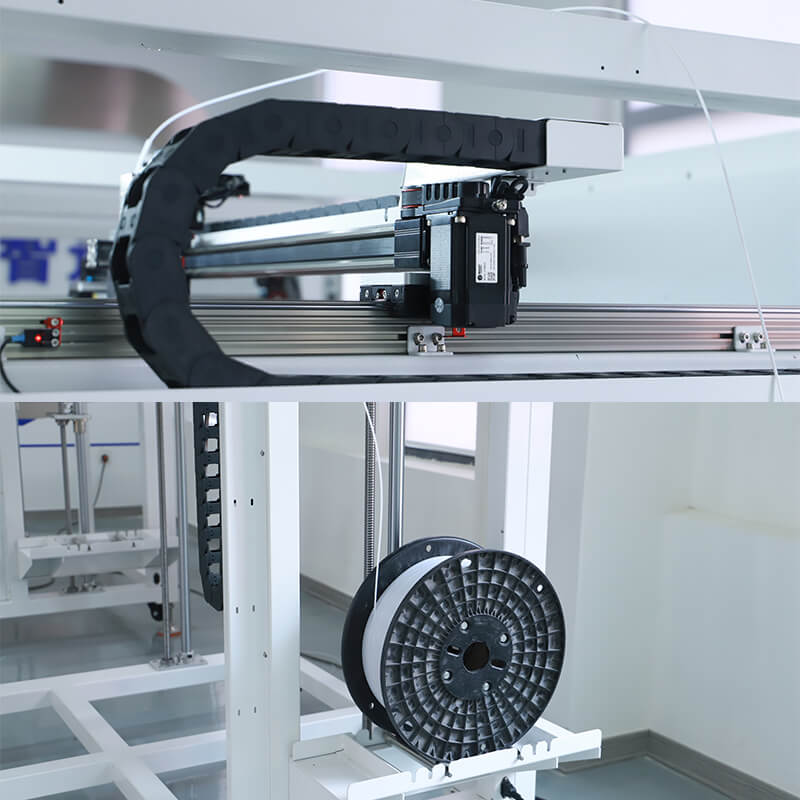
The whole frame is fabricated via integrated precision welding with a net weight of 320KG. It maintains zero vibration throughout large-format printing, eliminating layer lines and position shifting while preventing deformation of large-sized models. Its industrial-grade rigidity far surpasses ordinary assembled frames.
Intelligent Control System
Features may include:
- Touchscreen operation
- Remote monitoring
- Automatic error detection
- Printing progress management
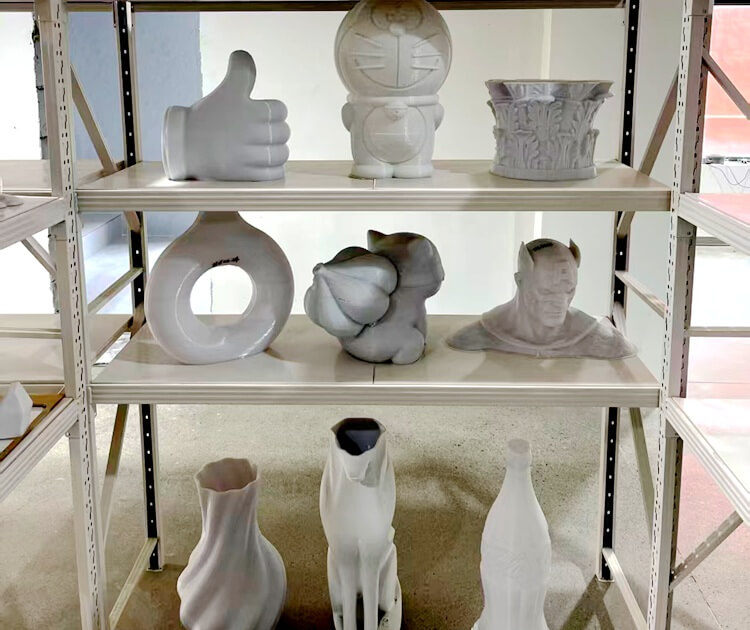
Application of Big 3D Printer
Rapid Prototyping — product design iteration in hours, not weeks.
Functional Parts — brackets, jigs, fixtures, enclosures.
Medical — surgical guides, prosthetic components, training models.
Aerospace & Automotive — tooling aids, ducting, lightweight brackets.
Architecture — scale models, concept mockups.
Consumer Products — cosplay armor, RC parts, replacement components.
Education — STEM learning tools, science models.
Common materials include:PLA,ABS PETG,TPU,Nylon,Carbon fiber reinforced filament,Glass fiber reinforced filament
Spare Parts — on-demand manufacturing of discontinued components.
3D Printer FAQ
An FDM (Fused Deposition Modeling) 3D printer is one of the most widely used additive manufacturing technologies. It works by heating thermoplastic filament until it melts and then extruding the material through a precision nozzle. The printer builds the object layer by layer according to a digital 3D model until the final part is completed.
FDM printing is known for its affordability, ease of operation, large build volumes, and wide range of compatible materials, making it ideal for rapid prototyping, engineering applications, education, and small-batch production.
An FDM (Fused Deposition Modeling) 3D printer is one of the most widely used additive manufacturing technologies. It works by heating thermoplastic filament until it melts and then extruding the material through a precision nozzle. The printer builds the object layer by layer according to a digital 3D model until the final part is completed.
Industrial systems offer higher precision, faster printing, larger build volumes, better reliability, advanced materials, and continuous production capabilities.
Generally, yes. FDM printers and filament materials are usually more affordable than resin-based systems, making them a popular choice for engineering and manufacturing.
| Material | Temp | Best For | Notes |
|---|---|---|---|
| PLA | 190–220°C | Prototypes, models, decor | Easy to print, biodegradable, brittle |
| PETG | 230–250°C | Functional parts, food-safe | Strong, flexible, moisture resistant |
| ABS | 220–250°C | Automotive, enclosures | Durable, needs enclosure to prevent warping |
| ASA | 240–260°C | Outdoor parts, UV-resistant | ABS alternative, weatherproof |
| TPU / TPE | 220–240°C | Gaskets, grips, wearables | Flexible and rubbery |
| Nylon (PA) | 250–270°C | High-stress mechanical parts | Tough but hygroscopic |
| PC | 260–310°C | Heat-resistant, impact parts | Very strong, needs high-temp printer |
| Carbon Fiber | 240–280°C | Lightweight structural parts | Abrasive — requires hardened nozzle |
| PVA / HIPS | 180–220°C | Support material (dissolves in water/limonene) | Used with dual extrusion |
- High-precision motion system for accurate printing
- Stable industrial-grade frame for long-term reliability
- Large build volume for oversized parts
- High-speed printing with optimized motion control
- Automatic bed leveling for improved first-layer adhesion
- User-friendly touchscreen interface
- Filament run-out detection and power-loss recovery
- Compatible with major slicing software
- Open material system for flexible filament selection
- Low operating and maintenance costs
One of the first questions buyers ask before investing in additive manufacturing is “How much is a 3D printer?” The answer depends on several factors, including printing technology, build size, printing accuracy, material compatibility, automation features, and intended application.
Today, 3D printers range from a few hundred dollars for entry-level desktop models to hundreds of thousands of dollars for industrial production systems.
If you’re purchasing a 3D printer for a business, engineering department, school, or manufacturing facility, understanding what determines the price can help you choose the right machine while maximizing your return on investment.
iGOLDEN provides advanced digital manufacturing equipment and CNC solutions for global customers.
iGOLDENLaser helps manufacturers adopt modern additive manufacturing technology for prototyping, product development, tooling, and industrial production.