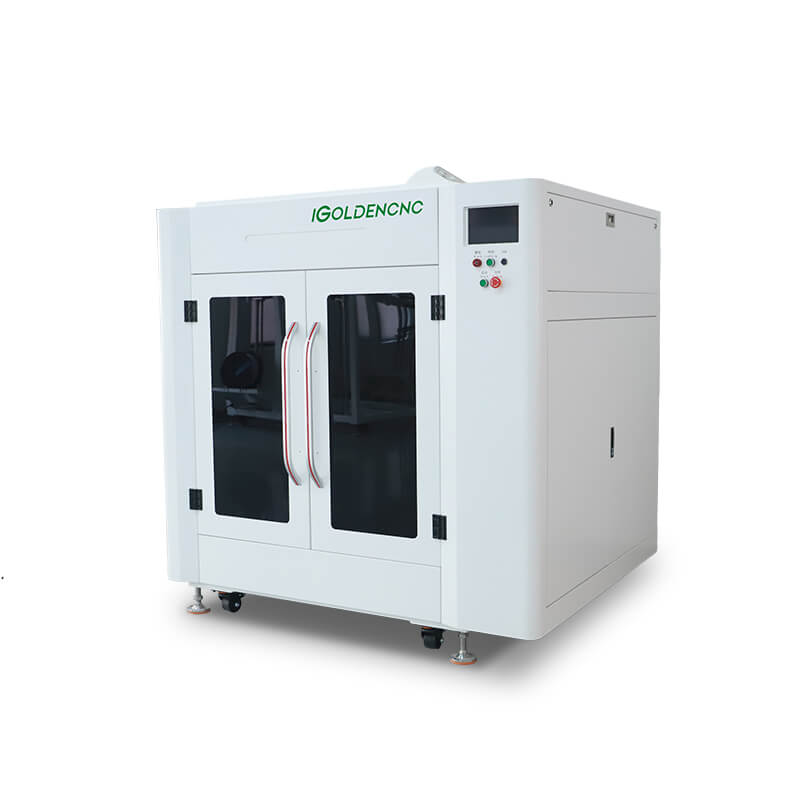
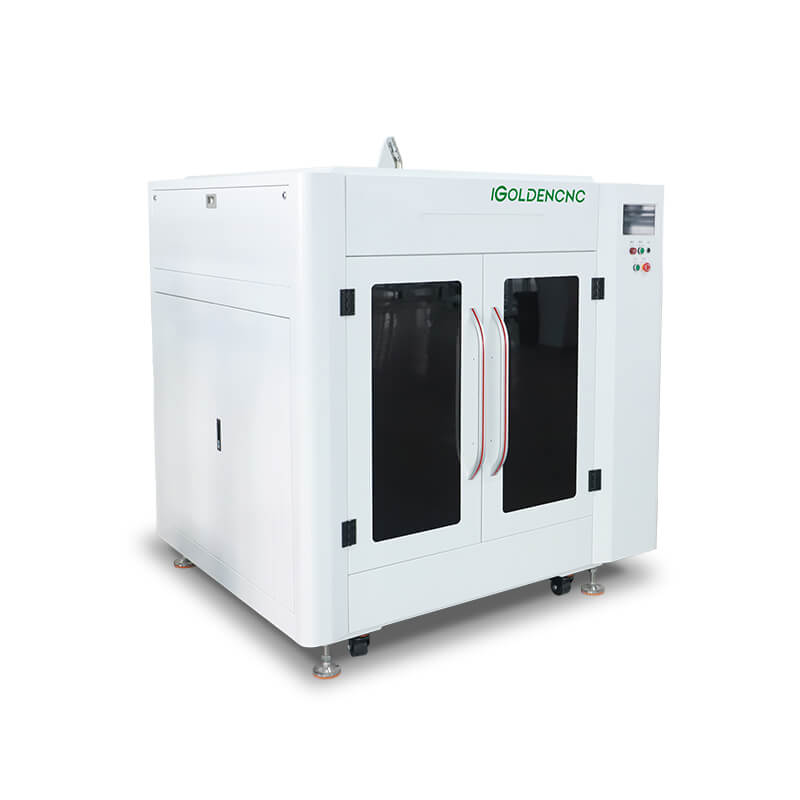
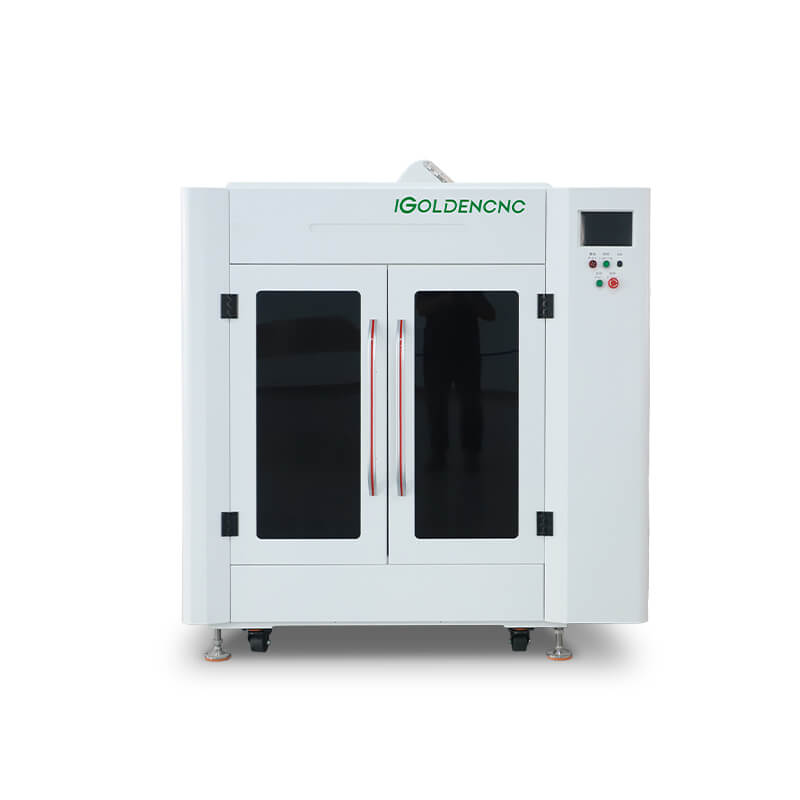
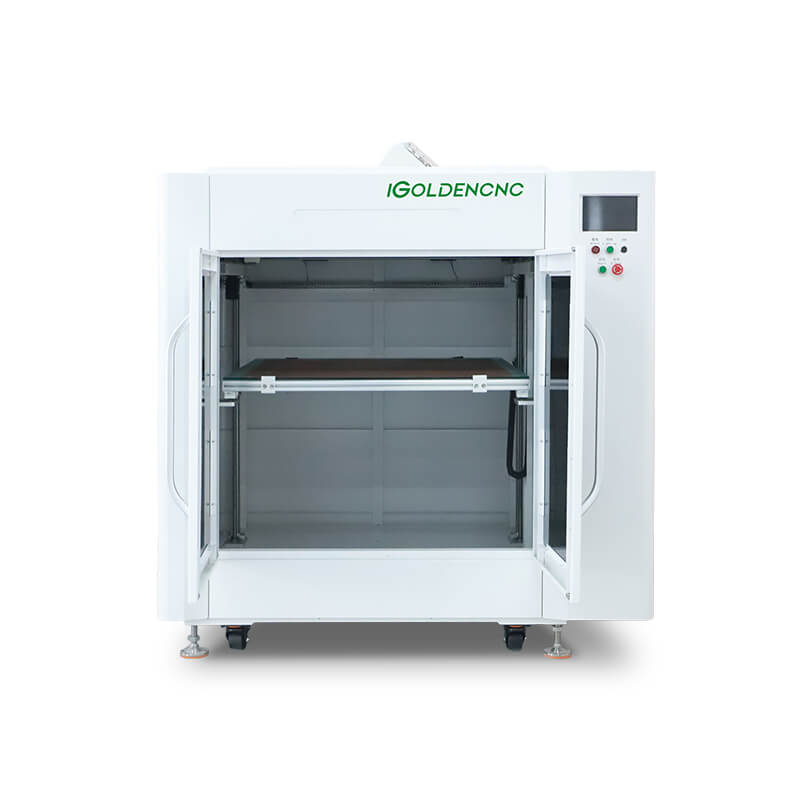
iGM-3DE-1000
Industrial 3D Printer
An industrial 3D printer creates three-dimensional objects layer by layer from digital CAD designs. It enables manufacturers to produce complex parts without traditional molds, reducing development time and production costs.
This Next-Generation Industrial 3D Printer integrates cutting-edge motion control algorithms, an actively heated environmental chamber. Whether you are generating high-strength functional prototypes, producing end-use components, or deploying low-volume customized production runs, this machine delivers spectacular repeatability. It empowers enterprises to collapse R&D lifecycles, eliminate expensive tooling lead times, and construct an unbreakable competitive edge.
Industrial 3D Printer Advantages
✅ Faster product development
✅ No expensive molds required
✅ Reduced material waste
✅ Custom manufacturing capability
✅ Complex structure production
✅ Shorter delivery cycles
✅ Suitable for small-batch production
3D Printer Technical Parameter

Extra Large 1m Forming Chamber for One-Stop Molding of Large-Sized Parts
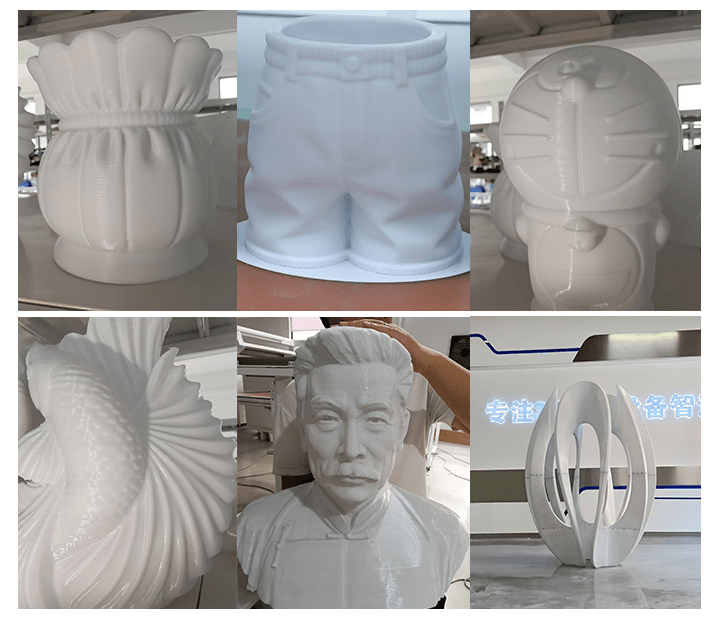
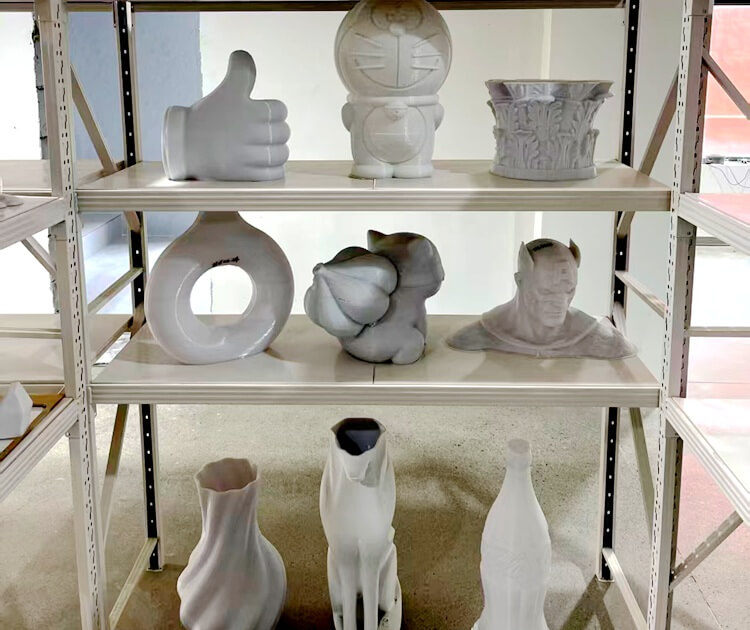
Forming dimension: 1000×1000×1000mm. It can print complete large molds, full vehicle shells, giant sculptures and industrial tooling fixtures in a single run without splitting and splicing. This eliminates splicing and polishing processes, greatly improving the integrity of large finished products and boosting production efficiency.
FDM 3D Printing
Fused Deposition Modeling (FDM) — also called Fused Filament Fabrication (FFF) — is the world’s most widely used 3D printing technology. A thermoplastic filament is fed through a heated nozzle, melted, and deposited layer by layer onto a build plate to build up a three-dimensional object from the bottom up.
Wide & High Temperature Printing System, Compatible with Multiple Engineering Consumables
0-350°C nozzle temp control, stable for ABS/PETG & industrial high-strength filaments.
Standard 2.85mm filament, optional 0.8/1.2/1.5/2.0mm nozzles for precision fine parts & fast large-model printing.
Al alloy/tempered glass/silicone heating bed (0-80°℃ precise control), uniform heat to stop large prints warping & base peeling.
High-Precision Industrial Transmission Balancing Speed & Accuracy
Ball screw + Φ3.0 optical shaft for Z-axis, Model 45 sliding table modules for XY axes; industrial transmission structure with positioning accuracy up to 0.02 mm.
Print accuracy 0.08-0.5 mm, optional layer thickness 0.3-0.8 mm; freely switch between delicate prototype and fast large-model modes.
Printing speed 50-200 mm/s, no step loss at high speeds for greatly improved mass production efficiency of large-size models.
Intelligent Control System
Features may include:
- Touchscreen operation
- Remote monitoring
- Automatic error detection
- Printing progress management
Application of Big 3D Printer
Rapid Prototyping — product design iteration in hours, not weeks.
Functional Parts — brackets, jigs, fixtures, enclosures.
Medical — surgical guides, prosthetic components, training models.
Aerospace & Automotive — tooling aids, ducting, lightweight brackets.
Architecture — scale models, concept mockups.
Consumer Products — cosplay armor, RC parts, replacement components.
Education — STEM learning tools, science models.
Common materials include:PLA,ABS PETG,TPU,Nylon,Carbon fiber reinforced filament,Glass fiber reinforced filament
Spare Parts — on-demand manufacturing of discontinued components.
3D Printer FAQ
An industrial 3D printer is a high-performance machine that creates three-dimensional objects directly from digital designs through an additive manufacturing process.
Unlike traditional manufacturing methods such as CNC machining, injection molding, and casting, which often require molds or material removal, 3D printing builds objects layer by layer.
The general workflow includes:
- Create a 3D model using CAD software.
- Convert the model into printable data.
- Select suitable printing materials.
- The printer deposits or cures material layer by layer.
- The completed part is removed and post-processed if required.
This digital manufacturing approach allows companies to produce complex geometries, customized parts, and prototypes faster than traditional methods.
An FDM (Fused Deposition Modeling) 3D printer is one of the most widely used additive manufacturing technologies. It works by heating thermoplastic filament until it melts and then extruding the material through a precision nozzle. The printer builds the object layer by layer according to a digital 3D model until the final part is completed.
Industrial 3D printers are used for producing prototypes, functional parts, tooling, molds, automotive components, aerospace parts, and customized products.
They are widely used in automotive, aerospace, manufacturing, medical, education, engineering, and product design industries.
Depending on the technology, they can process PLA, ABS, nylon, TPU, carbon fiber composites, engineering plastics, resin, and other advanced materials.
Industrial 3D printers offer larger build sizes, stronger structures, higher accuracy, faster production, and support for advanced materials compared with desktop models.
One of the first questions buyers ask before investing in additive manufacturing is “How much is a 3D printer?” The answer depends on several factors, including printing technology, build size, printing accuracy, material compatibility, automation features, and intended application.
Today, 3D printers range from a few hundred dollars for entry-level desktop models to hundreds of thousands of dollars for industrial production systems.
If you’re purchasing a 3D printer for a business, engineering department, school, or manufacturing facility, understanding what determines the price can help you choose the right machine while maximizing your return on investment.
Why Choose an Industrial 3D Printer?
Industrial 3D printers provide manufacturers with a flexible production solution for creating complex, customized, and high-performance parts. They help companies reduce manufacturing costs, accelerate innovation, and improve product development efficiency.
For industries requiring large-scale printing, engineering materials, and reliable production performance, an industrial 3D printer is an essential technology for modern smart manufacturing.