
Buyer Guide
Fiber Gasket Cutting Machine: How CNC Digital Knife Cutters Improve Gasket Manufacturing
Fiber gaskets play an important role in industrial sealing applications. They are widely used in automotive manufacturing, machinery, pumps, valves, pipelines, electrical equipment, and industrial fluid systems. Depending on the working environment, these gaskets may need to withstand pressure, temperature changes, vibration, oil exposure, and chemical contact.

As manufacturers face increasing demands for customized gasket shapes, smaller production batches, and shorter delivery times, traditional cutting methods may no longer meet every production requirement. Mechanical cutting, manual trimming, and die-cutting processes can involve additional tooling costs, material waste, and limitations when producing complex designs.
A Gasket Cutting Machine equipped with CNC digital knife cutting technology offers a flexible alternative. It uses computer-controlled cutting tools to process gasket sheets according to digital design files, allowing manufacturers to produce different shapes without manufacturing a dedicated cutting die for every design.
For gasket manufacturers, industrial seal suppliers, and custom component producers, a CNC Digital Knife Cutter can improve production flexibility while helping maintain consistent cutting dimensions.
In this guide, we explain how digital knife cutting works, which materials it can process, its main advantages, and how to select the right CNC cutting solution for your business.
What Is a Fiber Gasket Cutting Machine?
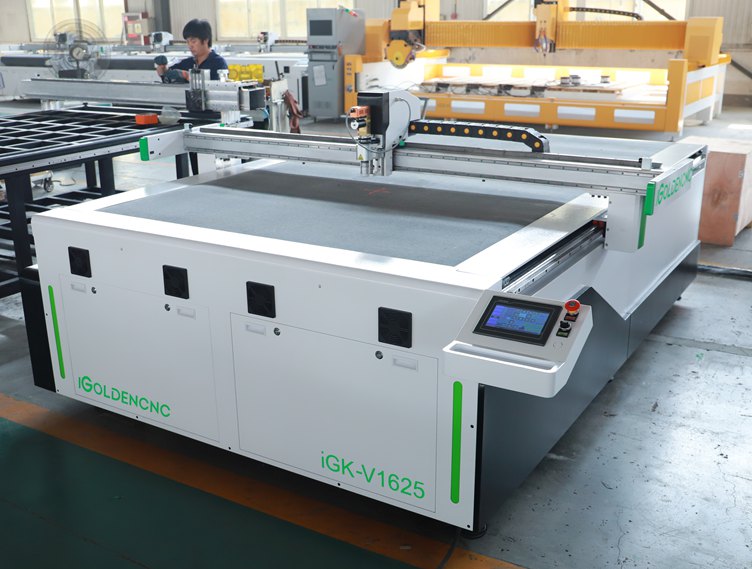
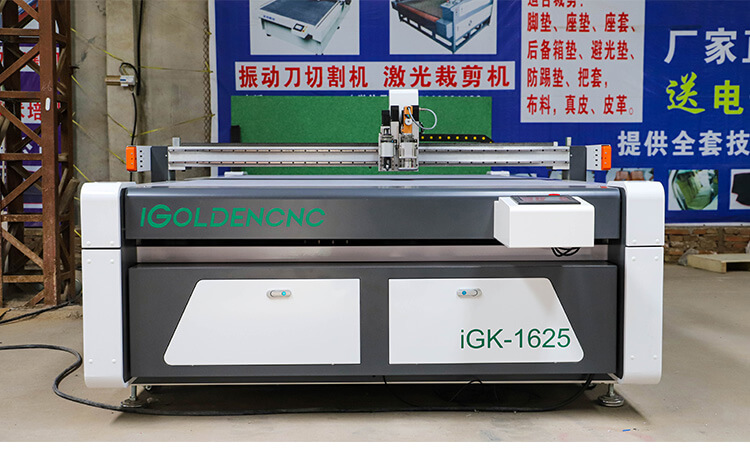
A Fiber Gasket Cutting Machine is designed to cut fiber-based gasket sheets into specific shapes and dimensions for industrial sealing applications. Depending on the material, machine configuration, and cutting tool, it can produce flat gaskets, sealing rings, flange gaskets, and other custom-shaped components.
A modern CNC Digital Knife Cutter uses a computer numerical control system to guide a cutting tool along a programmed path. Instead of relying on a fixed metal die, the machine follows the geometry of a digital drawing.
The operator can import a supported CAD design, arrange multiple gasket shapes on a sheet, configure the cutting parameters, and start the cutting process.
Typical components include:
- CNC control system: Controls the cutting path, movement, and processing parameters.
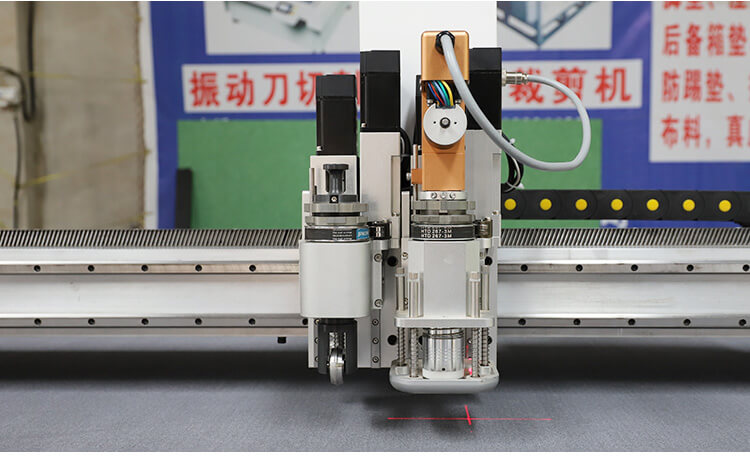
- Cutting head: Holds the selected knife or other compatible cutting tool.
- Working table: Supports the gasket sheet during cutting.
- Drive system: Moves the cutting head accurately along the X, Y, and, where applicable, Z axes.
- Vacuum adsorption system: Helps secure suitable sheet materials during processing.
- Nesting software: Arranges multiple parts to improve material utilization and simplify production planning.
The exact configuration depends on the machine model and the thickness, hardness, and structure of the gasket material.

How Does It Work? Does It Need a Die?
A CNC fiber gasket cutting machine uses digital design files to guide the cutting tool. The machine follows preset paths to cut the gasket material into the required shape.
Manufacturers do not need to make a physical die for every design. Operators can load a different CAD file and select a suitable cutting tool to produce another gasket shape or size.
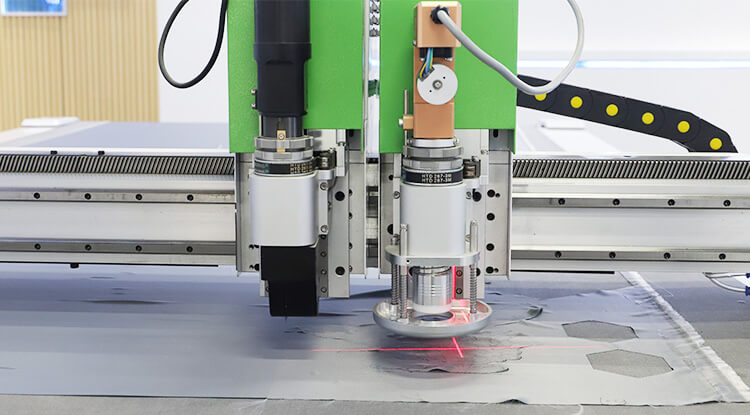
The process includes five main steps.
1. Import the Design File
Operators import a gasket CAD drawing into the cutting software. They set the cutting paths for the outer contour, inner holes, and bolt holes. These paths tell the machine where to cut.
2.Secure the Material
Operators place the fiber gasket sheet flat on the cutting table. A vacuum hold-down system can help keep the sheet in place during cutting. Stable material helps the machine follow the cutting paths accurately.
3.Set the Cutting Parameters
Operators select suitable cutting tools based on the material’s thickness, density, and hardness. They also adjust the cutting speed and depth. Correct settings help the tool cut through the material and produce clean edges.
4.Cut the Gasket Automatically
The CNC system controls the tool’s movement along the programmed paths. The machine cuts the inner holes, bolt holes, and outer contour according to the design file.
5.Inspect the Finished Gasket
Operators remove the finished gasket and check its dimensions, hole positions, and edge quality. They also confirm that the tool has cut through the entire sheet. These checks help ensure that the gasket meets the required specifications.

What Materials Can a CNC Digital Knife Cutter Process?
One of the major advantages of digital knife cutting is its versatility. With the correct tool configuration and suitable machine parameters, a CNC Digital Knife Cutter can process many non-metallic sheet materials used in gasket and industrial component manufacturing.
1. Fiber Gasket Sheets
Fiber-based gasket sheets are used in a wide range of industrial sealing applications. Depending on their composition, they may contain cellulose fibers, synthetic fibers, binders, or other additives.
A CNC knife cutter can produce custom gasket profiles from compatible fiber sheets, including components with multiple holes and complex external contours.
Material-specific testing is essential because different fiber compositions can behave differently during cutting.
2. Non-Asbestos Gasket Materials
Non-asbestos gasket sheets are commonly used in industrial sealing applications where the material must meet specific pressure, temperature, and chemical-resistance requirements.
A digital knife cutter can help manufacture custom shapes from compatible non-asbestos sheets without requiring a dedicated die for each design.
Always verify the material’s technical data and the suitability of the finished gasket for its intended operating environment.
3. Rubber Gasket Sheets
Rubber materials are widely used for sealing water, air, oil, and other fluids, depending on the rubber compound.
Suitable CNC knife cutting systems can process certain rubber sheets into sealing rings, flat gaskets, and custom profiles. Material elasticity, thickness, and surface friction should be considered when choosing the cutting tool and holding method.
4. Cork and Rubber-Cork Sheets
Cork and rubber-cork materials are used in selected sealing applications because of their compressibility and sealing characteristics.
Depending on the material density and thickness, a digital knife cutter can produce different gasket shapes for equipment maintenance, automotive components, and industrial machinery.
5. PTFE and Other Engineering Sheet Materials
PTFE and other engineering materials are used in applications that require particular chemical or temperature resistance.
Some compatible sheet grades can be processed with appropriate CNC knife cutting configurations. However, material deformation, thickness, and edge requirements should be evaluated before selecting the production method.
Important: A CNC Digital Knife Cutter is not automatically suitable for every fiber, rubber, or engineering sheet. Confirm the machine’s cutting capabilities with the supplier and test the exact material before purchasing.
Key Advantages of a CNC Digital Knife Cutter for Gasket Production
1. No Dedicated Cutting Dies Required
Traditional die cutting often requires a custom die for each gasket design. This can increase initial tooling costs, especially when a manufacturer handles many different shapes or frequent design changes.
A CNC Digital Knife Cutter uses digital cutting paths instead. When a customer requests a new gasket profile, the operator can update the design file without ordering a new physical die.
This approach is particularly useful for prototyping, custom orders, replacement parts, and low-volume production.
2. Flexible Production for Different Gasket Shapes
Industrial gasket orders can vary significantly in size and geometry. A single production schedule may include small sealing rings, large flange gaskets, and irregularly shaped components.
With suitable software and tool configurations, one CNC cutting system can process multiple designs in sequence. This flexibility helps manufacturers respond to changing order requirements.
3. Accurate and Repeatable Cutting
Computer-controlled motion follows programmed cutting paths, helping produce consistent dimensions across repeated jobs.
Actual accuracy depends on the machine structure, drive system, tool condition, material stability, calibration, and operating parameters.
For applications with strict dimensional tolerances, manufacturers should confirm the supplier’s stated accuracy and repeatability specifications and validate them through sample testing.
4. Improved Material Utilization
Gasket production frequently involves cutting multiple components from a single sheet. Poor arrangement can leave substantial unused material between parts.
Nesting software helps arrange shapes more efficiently and can reduce scrap when compared with less optimized layouts.
The actual savings depend on gasket geometry, minimum spacing requirements, sheet dimensions, and material characteristics.
5. Faster Design Changes
In industries such as machinery maintenance and industrial equipment manufacturing, customers may need replacement gaskets in different sizes or configurations.
Digital cutting allows operators to modify a CAD file and produce a new design without waiting for a replacement die.
This can help reduce preparation time and make customized production more practical.
6. Reduced Manual Cutting Work
Manual cutting requires skilled operators and can introduce variation between parts, particularly when handling intricate profiles or large production quantities.
CNC knife cutting automates the programmed path, reducing the amount of manual cutting required. Operators can focus more on material preparation, machine monitoring, quality inspection, and production planning.
7. Suitable for Prototypes and Small-Batch Orders
Traditional tooling expenses can make small production runs less economical.
Because digital knife cutting does not require a dedicated die for each profile, it can be an attractive solution for sample development, engineering trials, customized orders, and small-batch gasket manufacturing.
For large-volume standardized parts, however, die cutting may remain competitive. The most economical process depends on order quantity, material, tooling costs, and production speed.

CNC Digital Knife Cutting vs. Traditional Die Cutting
Both CNC knife cutting and die cutting have important roles in gasket manufacturing. Choosing between them depends on production volume, part geometry, material properties, and delivery requirements.
| Comparison | CNC Digital Knife Cutter | Traditional Die Cutting |
|---|---|---|
| Tooling | No dedicated die required for each design | Usually requires a suitable physical die |
| Design changes | Generally handled through digital files | May require new or modified tooling |
| Small batches | Often suitable for customized, low-volume work | Tooling costs may be significant per part |
| Complex contours | Flexible with suitable tools and software | Depends on die design and tooling capabilities |
| Repeat production | Programmable and repeatable | Efficient with established tooling |
| High-volume production | Depends on cutting speed and part layout | Can be highly efficient for standardized parts |
| Material waste | Can benefit from software nesting | Depends on die layout and production method |
For manufacturers producing many different gasket designs, a CNC Digital Knife Cutter can offer greater flexibility. For very large quantities of identical parts, traditional die cutting may provide higher throughput.
Some manufacturers use both technologies to balance customization and mass production.
Common Applications of Fiber Gasket Cutting Machines

A CNC Digital Knife Cutter can support different industries that require custom non-metallic sealing components.
Automotive and transportation: Production of compatible flat gaskets and sealing components for selected engine, transmission, and equipment applications.
Pumps and valves: Cutting flange gaskets, sealing rings, and custom profiles used in fluid-handling equipment.
Industrial machinery: Manufacturing replacement gaskets for production equipment, mechanical assemblies, and maintenance operations.
Pipelines and fluid systems: Producing compatible gasket shapes for selected pipe connections and flange assemblies.
Electrical equipment: Processing suitable insulating and sealing sheet materials used in electrical enclosures and industrial components.
Custom gasket suppliers: Producing prototypes, replacement parts, and low-volume orders for customers with different drawing requirements.
Material compatibility and operating conditions must always be verified. The finished gasket should meet the required sealing, temperature, pressure, and chemical-resistance specifications.

IGOLDEN BLOG
Thank you for visiting the iGOLDENCNC website. iGOLDENCNC is the professional supplier of CNC machinery application solution, within the business of producing and selling CNC machinery and accessories.