
Buyer Guide
Differences Between Digital Cutters and Die-Cutting Machines
As the packaging, printing, advertising, textile, leather, and sign-making industries continue to embrace digital manufacturing, businesses are increasingly evaluating whether to invest in a digital cutting machine or a traditional die-cutting machine. While both technologies are designed to cut materials into precise shapes, they differ significantly in terms of workflow, flexibility, production efficiency, operating costs, and suitable applications.
Understanding these differences is essential for choosing the right equipment for your production needs. In this guide, we’ll compare digital cutters vs. die-cutting machines, explore their advantages and limitations, and help you determine which solution delivers the best return on investment.
What Is a Digital Cutter?
Digital Cutter is a machine designed for straight-line cutting of materials such as paper, plastic, fabric, and cardboard. It uses sharp blades to perform linear or simple curved cuts, ideal for dividing large sheets into smaller sections.
Because the machine follows CAD or vector files, manufacturers can quickly switch between different products without changing tooling.
Digital cutters are widely used for:
- Packaging prototypes
- Corrugated box production
- Foam board cutting
- KT board processing
- Leather cutting
- Textile cutting
- Vinyl graphics
- Stickers and labels
- Sign making
- Display production
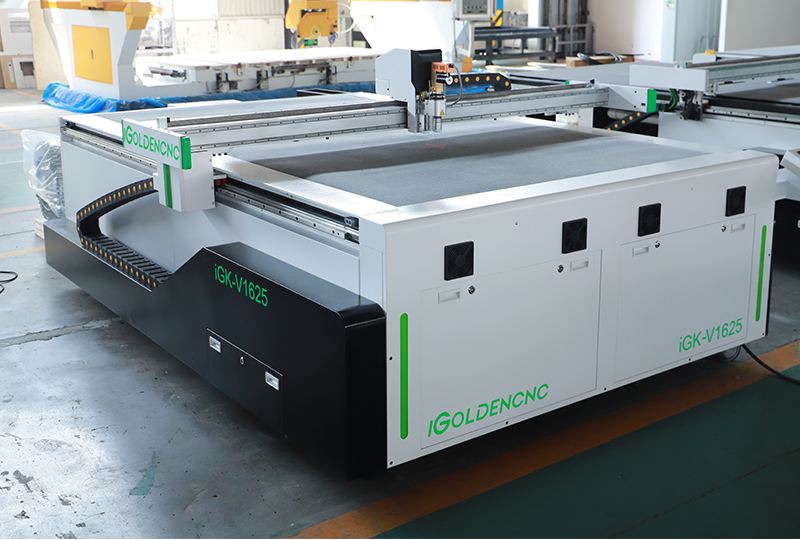
How Digital Cutters Work
The workflow is straightforward:
Create a design using CAD or graphic design software.
Import the file into the cutting software.
Place the material on the vacuum table.
Select the appropriate cutting tool.
The CNC system automatically completes cutting, creasing, perforating, or contour cutting.
No physical tooling is required.
Advantages of Digital Cutters
No cutting dies required
Lower tooling costs
Fast product changeover
Ideal for customized production
Reduced material waste
Intelligent nesting software
High precision
Easy operation
Lower inventory costs
Supports Industry 4.0 manufacturing
Die-Cutting Machines
Die-Cutting Machine utilizes custom-made dies (cutting molds) to create complex shapes in materials. It can perform multiple operations in a single pass, including punching, creasing, kiss-cutting, and perforating, making it suitable for intricate designs.
Die-cutting has been the standard manufacturing method for decades and remains an excellent solution for large-volume production where the design rarely changes.
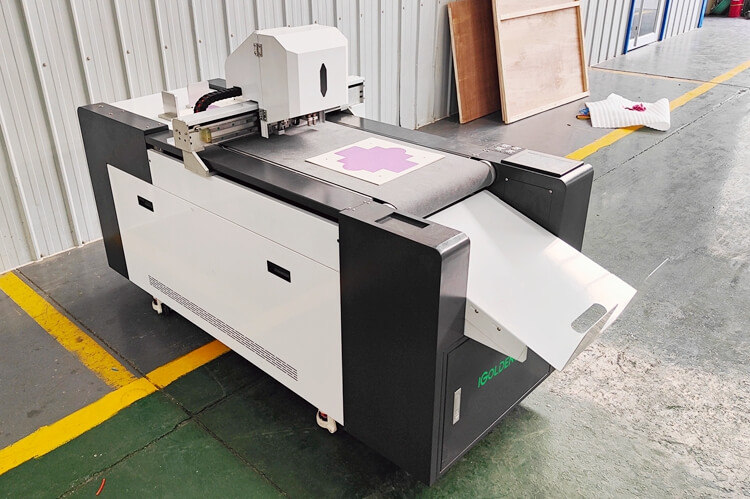
Common applications include:
- Folding cartons
- Product packaging
- Labels
- Gaskets
- Foam inserts
- Leather components
- Automotive insulation
- Rubber seals
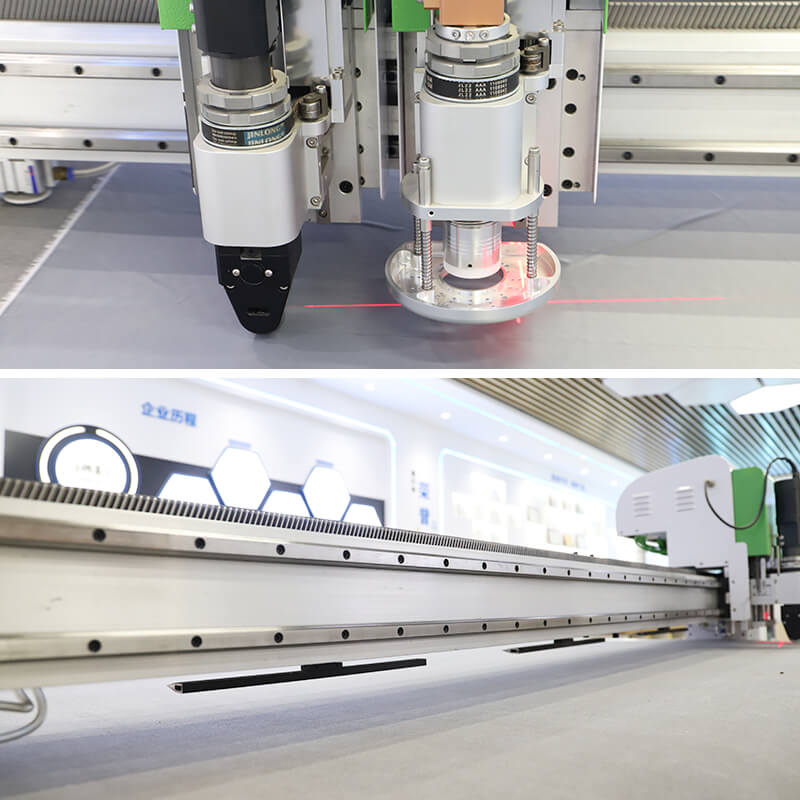
How Die-Cutting Machines Work?
The process includes:
Design the product.
Manufacture a steel-rule die.
Install the die into the press.
Position the material.
Apply pressure to stamp the shape.
Each new design requires a new die.
Advantages of Die-Cutting Machines
Extremely high production speed.
Low cost per part in mass production.
Mature manufacturing technology.
Excellent consistency for standardized products.
Ideal for long production runs.
Major Differences Between Digital Cutters and Die-Cutting Machines
1. Tooling Requirements
Digital Cutter
No physical die is required. Digital files control the entire cutting process.
Advantages include:
- Instant design changes
- No tooling investment
- Faster product development
Die-Cutting Machine
Every design requires a custom steel-rule die.
This means:
- Additional tooling costs
- Longer preparation time
- Storage requirements for dies
2. Production Flexibility
Digital cutters are extremely flexible.
Manufacturers can switch from one product to another within minutes simply by opening another digital file.
Die-cutting machines require replacing the physical die every time the product changes.
3. Initial Investment
Digital cutters generally require a higher machine investment but eliminate ongoing die manufacturing costs.
Traditional die-cutting machines often cost less initially but require continuous investment in tooling for every new design.
4. Production Volume
Digital Cutter
Ideal for:
- Samples
- Prototypes
- Customized products
- Small batches
- Medium-volume production
Die Cutting
Ideal for:
- High-volume production
- Standardized products
- Long production runs
5. Material Waste
Digital cutters typically include intelligent nesting software that automatically arranges parts for maximum material utilization.
Die-cutting relies more heavily on fixed layouts, which may generate higher material waste.
6. Production Speed
For extremely large production volumes, traditional die-cutting machines generally achieve higher output rates.
However, when setup time and design changes are considered, digital cutters often provide faster overall production for customized orders.
7. Cutting Accuracy
Both technologies offer excellent precision.
Modern CNC digital cutters can achieve positioning accuracy of approximately ±0.1 mm, making them suitable for demanding industrial applications.
Industry Applications
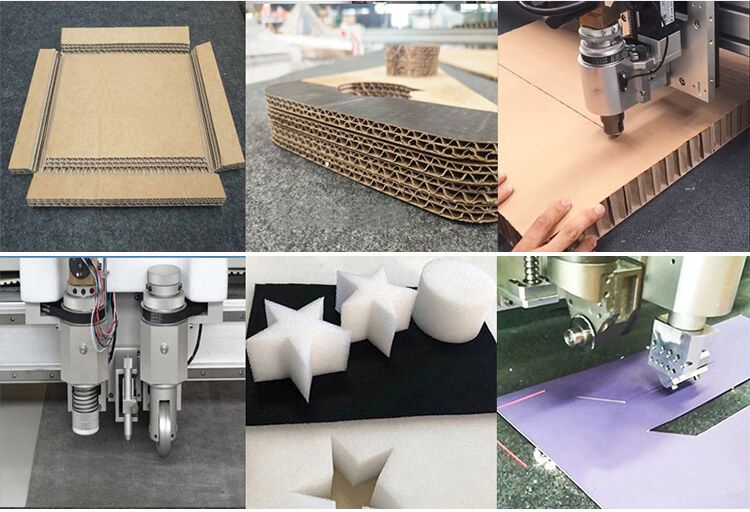
Packaging Industry
Digital cutters are ideal for:
- Packaging samples
- Custom boxes
- Small-batch production
Die-cutting remains the preferred solution for mass-produced cartons.
Advertising Industry
Digital cutters produce:
- POP displays
- POS displays
- Exhibition boards
- Retail signage
- Foam board displays
Because advertising products frequently change, digital cutters provide greater flexibility.
Leather Industry
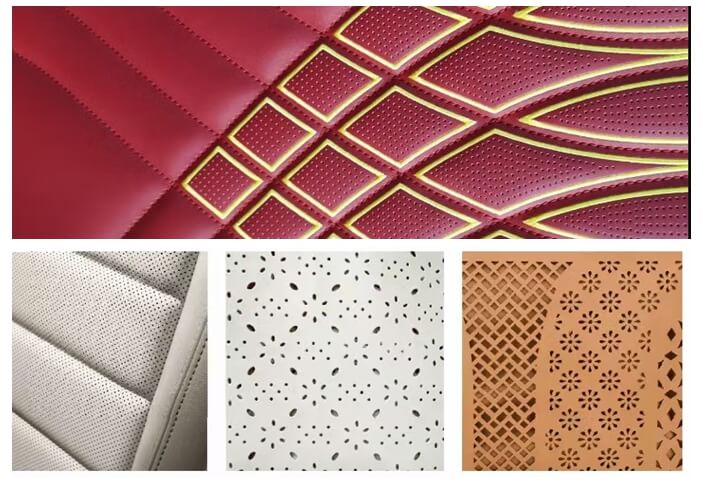
Digital cutters eliminate expensive cutting dies and automatically optimize leather utilization.
Applications include:
- Shoes
- Handbags
- Wallets
- Belts
- Automotive interiors
Textile Industry
Digital cutters accurately process:
- Garments
- Upholstery
- Sportswear
- Composite fabrics


Which Machine Should You Choose?
A digital cutter is the better choice if your business focuses on:
- Custom packaging
- Product prototypes
- Short production runs
- Frequent design changes
- Advertising displays
- Personalized products
- Flexible manufacturing
A die-cutting machine is better suited for:
- High-volume production
- Standardized products
- Long-term manufacturing
- Minimal product variation
Many modern manufacturers combine both technologies—using digital cutters for product development and short runs, then transitioning to die-cutting for large-scale production once the design is finalized.
Frequently Asked Questions (FAQ)
Is a digital cutter better than a die-cutting machine?
It depends on your production requirements. Digital cutters excel in flexibility, customization, and prototype production, while die-cutting machines are more economical for very high-volume manufacturing.
Do digital cutters require steel-rule dies?
No. Digital cutters operate directly from digital design files and eliminate the need for physical cutting dies.
Which machine is more suitable for packaging prototypes?
A digital cutter is the preferred choice because it allows immediate design revisions without the cost or delay of manufacturing new dies.
Can digital cutters process multiple materials?
Yes. By changing tools, the same machine can cut paper, cardboard, foam, leather, fabric, rubber, vinyl, KT board, PVC foam board, and many other materials.
Can digital cutters reduce production costs?
Yes. They eliminate die-making costs, reduce material waste through intelligent nesting, shorten setup times, and improve production efficiency for customized and short-run manufacturing.
Technology integration trend
The new generation of intelligent die-cutting platform is combining the advantages of both:
Adopting servo-driven digital pressure control
Configured with fast die change system (<5 minutes)
Integrated CCD visual positioning CNC die-cutting
Supporting mold library + CNC cutting mixed processing
Equipped with MES system intelligent scheduling function
This hybrid technology is particularly suitable for the short-run and personalized needs of the packaging industry, combining the efficiency of traditional die-cutting machines with the flexibility of CNC equipment, and represents the future development direction.

IGOLDEN BLOG
Thank you for visiting the iGOLDENCNC website. iGOLDENCNC is the professional supplier of CNC machinery application solution, within the business of producing and selling CNC machinery and accessories.