
Laser Knowledge
Laser Welding Machine :Air Cooling vs. Water Cooling Difference
Cooling is a core part of any laser welding setup. The way a laser head and power electronics shed heat can influence beam stability, reliability, uptime, and total cost of ownership. Two common cooling approaches are air cooling and water cooling. Both have their place, depending on laser power, duty cycle, ambient conditions, and production goals. This guide explains how air cooling and water cooling differ, where each shines, and how to decide which method fits your application.
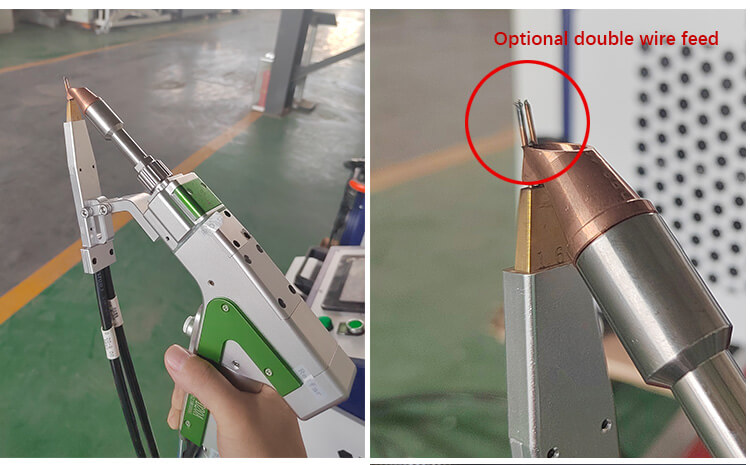
Laser Welding Machine
Laser welding machine uses a high-energy laser beam to join metals with speed and precision, requiring little post-weld polishing. A fiber laser welding machine offers high precision and delivers 4X faster welding speed than TIG and MIG welding. It can produce high-quality welds with minimal distortion and heat-affected zones. Laser welders have the capacity to weld a wide range of materials and thicknesses, including both similar and dissimilar metals, such as stainless steel, aluminum, copper, steel, iron, galvanized sheet, or a combination of dissimilar metals.
Why choose laser welding machines?
Speed & Efficiency: Laser welding is 3~5 times faster than TIG, MIG, and arc welding, increasing production efficiency.
Precise and Clean Welds: Provides precise and clean welds with minimal heat distortion.
Strong and Durable Welds: Offers strong and durable welds.
Minimal Post-Weld Treatment: Minimal polishing & cleaning required, reducing labor costs.
Various Materials: Ability to weld a wide range of materials, including metals, alloy, plastics, and non-metals.
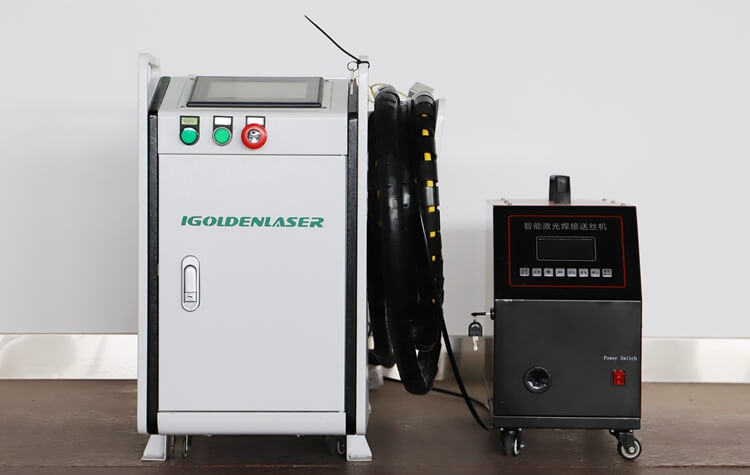
How Cooling System Affects Laser Welding Machine Performance?
The cooling system of a laser welding machine is primarily used to control the operating temperature of the laser source and optical components, preventing performance degradation or damage caused by overheating. Cooling systems typically consist of water cooling, air cooling, or a hybrid of both. Water cooling is the most common method, using circulating coolant—usually deionized water—to carry away heat. Air cooling relies on fans to force air circulation, dissipating heat from the surface of the laser. For high-power lasers, hybrid cooling systems combine the advantages of both water and air cooling, offering effective temperature control while maintaining a compact design.
Protecting Core Components
During laser welding, the laser sources a significant amount of heat. Without timely cooling, high temperatures can damage optical and electronic components, affecting performance and shortening their lifespan. A cooling system effectively dissipates heat, ensuring that key components such as the laser operate stably within a safe temperature range.
Improving Laser Output Stability
Temperature fluctuations can lead to instability in laser power and wavelength, which negatively impacts welding quality. A cooling system maintains a constant temperature, ensuring consistent and precise laser output—crucial for high-precision welding applications.
Extending Equipment Lifespan
Excessive heat accelerates material aging and increases the risk of failure. Efficient cooling reduces the need for maintenance and significantly extends the overall service life of the machine, enhancing return on investment.
Optimizing Production Efficiency
Proper cooling prevents downtime caused by overheating, enabling continuous and stable operation. This supports higher overall productivity and operational efficiency.
Air Cooling vs. Water Cooling Laser Welding Machine
Air-Cooled Laser Welding Machine – Pros:
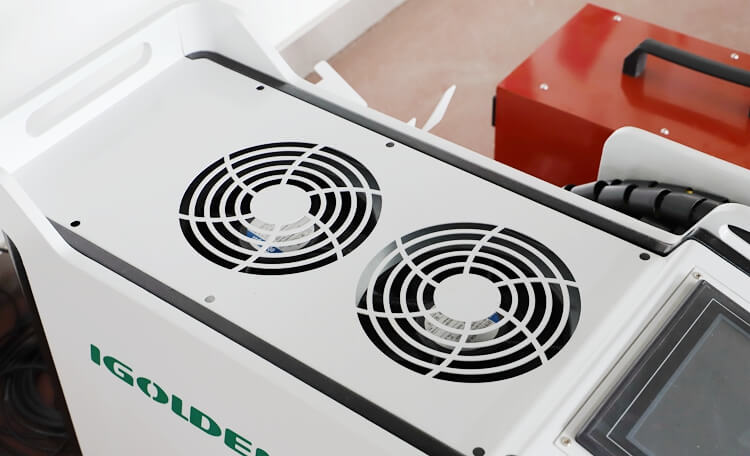
The air cooling system is typically simpler in design, requiring no pumps, chillers, or reservoirs. This simplicity leads to greater portability and easier installation.
Compact size takes up minimal space, making it easy to carry and move.
Lower initial investment and operating costs, with relatively easy maintenance.
Air-Cooled Laser Welding Machine – Cons:
The cooling performance of air-cooled laser welder is relatively weaker, resulting in shorter lifespan. Additionally, they tend to generate more noise compared to water-cooled lasers.
Water-Cooled Laser Welding Machine – Pros:
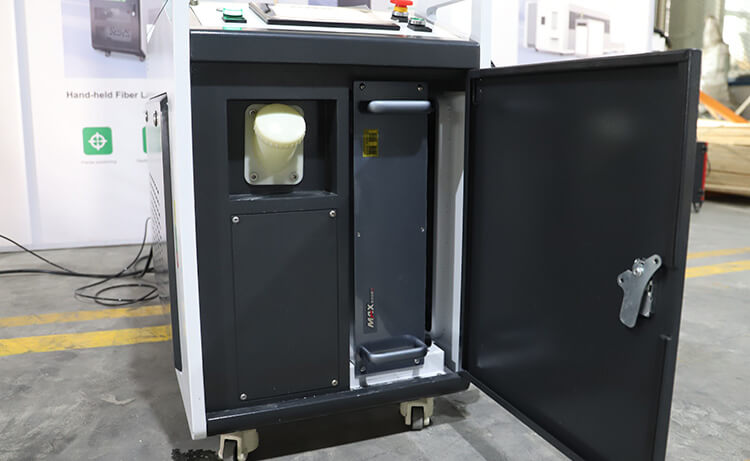
Excellent cooling performance allows for continuous and efficient operation.
Suitable for high-power applications; water-cooled laser welding machines can handle higher power, meeting the welding needs of large workpieces and thick materials.
Water cooling maintains a more constant temperature, providing precise control crucial for applications requiring thermal stability.
Water-Cooled Laser Welding Machine – Cons:
Requires an additional water cooling system, making installation and maintenance more complex and requiring more space.
Both the efficient heat dissipation of water cooling and the convenience and cost-effectiveness of air cooling play vital roles in ensuring the stable operation of laser welding equipment. When making a choice, factors such as specific process requirements, working environment, and budget should be comprehensively considered.
For users who frequently change work locations or place a high priority on portability, an air cooled laser welding machine may be the more suitable option. On the other hand, for industrial production scenarios that require long-term continuous operation and have strict demands on welding quality and equipment stability, a water-cooled laser welding machine offers greater advantages.

Water-Cooled vs. Air Cooled Welding Machine – How To Choose?
Size
Water-cooled welding machines require external chillers, which increase the overall system size and reduce portability. They are better suited for fixed locations such as factories or workshops.
Air-cooled handheld laser welding machines have built-in cooling components, making them smaller and lighter. Their integrated design enhances portability, making them very easy to carry and move around. They are ideal for on-site work and outdoor environments.
Application Scenarios
Air-cooled systems rely on fans to circulate air for cooling, featuring simple structures and easy maintenance. They are commonly used in pulsed lasers or some low-power continuous lasers with lower cooling demands, sufficiently meeting temperature control needs for light-duty daily operations.
In contrast, water-cooled systems efficiently remove heat through circulating water, making them suitable for high-power lasers and other high-heat-generation scenarios. Their superior cooling performance provides more stable and reliable temperature control during prolonged continuous work or in high-temperature, enclosed environments.
Welding Thickness
If your work environment requires frequent equipment movement or mainly involves welding small thin plates up to 4mm thick, air-cooled handheld laser welding machines are more suitable. They are lightweight, easy to operate, and particularly ideal for applications with less stringent cooling requirements but higher demands for portability and flexibility, such as small handheld devices and outdoor jobs.
For welding tasks involving large workpieces up to 6mm thick or requiring long continuous operation, water-cooled handheld laser welding machines are recommended. Their higher cooling efficiency and stable performance make them well-suited for industrial-grade high-power equipment and applications that demand continuous, high-output welding, such as industrial laser welding.
Power
Air-cooled handheld laser welding machines are mainly available in 1000W and 1500W models.
Water-cooled handheld laser welding machines offer a wider range of options, including 1000W, 1500W, 2000W, 3000W, and 6000W.
Due to better cooling performance, water-cooled handheld laser welders can be equipped with higher-power laser sources, such as 1500W, 2000W, or even 3000W. Higher power means the laser is suitable for welding thicker materials. These machines are typically used for welding workpieces 3mm thick or more and can complete the welding in a single pass, ensuring welding quality.
Air-cooled handheld laser welders typically use laser power between 500W and 1500W and are commonly used for welding metal materials with thicknesses of 1 to 2mm.
| Features | Air-Cooled | Water-Cooled |
| Cooling Efficiency | Efficient for most tasks | High |
| Portability | High | Low |
| Maintenance Costs | Low | High |
| Initial Cost | Affordable | More expensive |
| Noise Level | Moderate to High | Low |
| Ideal Usage | Portable welding, low to medium power tasks | High-power, continuous welding |
IGOLDENLaser offers a variety of air-cooled and water-cooled handheld laser welding machines to meet different application needs and boost efficient welding!
IGOLDEN laser welding machines are equipped with the latest generation of fiber lasers, featuring easy operation, beautiful weld seams, and fast welding speed. They perfectly meet the processing requirements of thin stainless steel plates, iron plates, galvanized sheets, and other metal materials, easily replacing traditional processes such as argon arc welding and electric welding.
They are widely used in complex and irregular welding tasks across various industries, including kitchen cabinets and sanitary ware, stairs and elevators, shelving, ovens, stainless steel doors, windows and railings, distribution boxes, stainless steel furniture, as well as hardware and sheet metal fabrication. Summary, choosing between an air cooled and water cooled laser welder ultimately depends on your specific needs and operating conditions. Understanding the difference between air cooled and water cooled laser welder helps you balance factors like portability, cooling efficiency, maintenance requirements, and cost. Making an informed decision ensures your laser welder delivers reliable performance and long-term value. If you want to learn more or need expert advice, feel free to reach out to us!

IGOLDEN BLOG
Thank you for visiting the iGOLDENCNC website. iGOLDENCNC is the professional supplier of CNC machinery application solution, within the business of producing and selling CNC machinery and accessories.